Director of Geological Exploration at Gazprom Neft: We Have Found the Technological Key to 20% of the Achimov Formation in Western Siberia

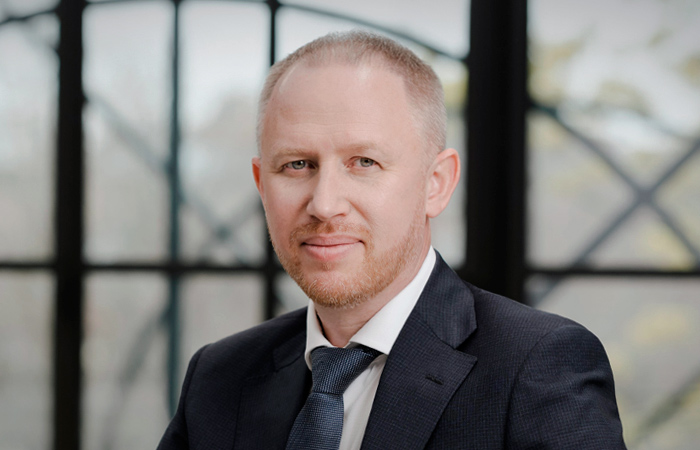
Yuri Masalkin spoke about trends in the industry and priorities for Gazprom Neft
Geological exploration is a basic element of the work of any mining company. Without the resource component, the business planning horizon of an oil company is critically narrowed. But geological exploration is also the highest-risk stage; the average chance of success here is estimated at 30-40%, and investments begin to pay off after eight years or more. How the geological exploration direction feels in the current conditions, what trends in this area are being shaped by the current situation in the industry and how Gazprom Neft solves geological exploration tasks, the director for geological exploration and development of the company’s resource base, Yuriy Masalkin, spoke in an interview with Interfax.
– How is the domestic geological exploration industry coping with the crises of recent years?
– Recent years have confirmed that, despite the changing environment, the demand for hydrocarbons is stable. Moreover, in the coming decades it will only grow, primarily due to India, China, the countries of Southeast Asia, the Middle East and Africa. At the same time, there is already serious underinvestment in the development of the industry. This is the general state of the world oil market. It is dangerous because the crises are passing and the dynamics of global hydrocarbon consumption continues to gain momentum. Russia ranks first in the world in terms of mineral reserves, and we should take full advantage of our hydrocarbon advantages and systematically think about increasing reserves and geological exploration.
Today we receive from the state support for a large number of initiatives important for the development of geological exploration, including the involvement of complex reserves, a big step forward has been made at the level of tax changes – an additional income tax has been introduced, which optimizes the mineral extraction tax, the law on hard-to-recover reserves has been updated, and much more.
In recent years, we have invested a lot in the development of our own technologies and digital tools for prospecting and production, and today we continue to implement even the most complex geological exploration projects, which have few analogues in the world. At the moment everything is working, nothing has stopped – this is a key assessment of the current state of the Russian exploration industry. In general, alternative equipment and components have appeared on the market that make it possible to ensure the continuity of all production processes. We found domestic suppliers and related industries where the role of technology is high – we began to offer options for the development of joint projects.
Long before global changes, we began to work on technological independence of equipment and technologies. In some areas we have made very significant progress, in some areas we are waiting for results and looking for additional opportunities, but the goal is the same – in the future, to have guarantees, if not for all occasions, then certainly for critical moments.
– What are the trends in the geological exploration block of Gazprom Neft in recent years?
– Our strategy was initially based on a comprehensive portfolio of exploration projects. At each period of time, we subject it to analysis – in which regions it is better to develop, what quantity and quality of reserves and in what time frame it is necessary to obtain.
During the pandemic, with a reduction in production and low oil prices, the situation was difficult; a number of areas of geological exploration then paused. Last year, we again took up those projects that were more or less suspended during Covid, in 2020-2021. Their rethinking taking into account new realities forces us to form a portfolio that can provide maximum guarantees for the short and long term. It is important to concentrate your efforts. Gazprom Neft is now accelerating geological exploration in strategically important areas.
At the end of 2022, the company replenished production with new reserves by 119%. We discovered 20 new deposits and received licenses for 16 areas in Western Siberia. We are talking about new assets in the Krasnoyarsk Territory, the Yamal-Nenets Autonomous Okrug and the Yenisei Bay of the Kara Sea. Their acquisition continued the development of promising search clusters in the south of Yamal, the Gydan and Taimyr peninsulas. The company’s production supply with prepared reserves was 19 years.
– Which exploration projects are now a priority for Gazprom Neft?
– The first strategy for developing the company’s resource base appeared in 2016, since then we have collected more than 90 new license areas. During this time, exploration projects were initiated in several new exploration areas of Yamal and Gydan, in the Orenburg region, and in Eastern Siberia. We have placed a different emphasis in the traditional production regions – Khanty-Mansi Autonomous Okrug and Yamal-Nenets Autonomous Okrug, and have learned, using modern technologies, to find high-quality reserves that can be quickly involved in development.
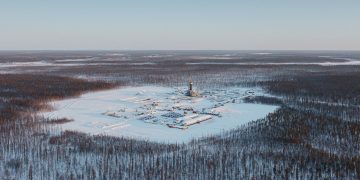
Currently, Gazprom Neft’s geological exploration is focused on delivering results as quickly as possible. For example, at the “Winter” project in Khanty-Mansi Autonomous Okrug in 2017, the first well was drilled and a new field was discovered. Now a new cluster is being created there, which will provide about half of the production of one of the largest enterprises of the company – Gazpromneft-Khantos. Discoveries at this project continue; the increase in reserves in 2022 alone amounted to 26 million tons.
Also last year, Gazprom Neft discovered one of the largest fields in the modern history of the Orenburg region, a long-developed and well-studied region. At the Solnechny license area, part of the South Orenburg project, a deposit with geological reserves of about 53 million tons of oil equivalent was discovered; it was named after geologist Viktor Orlov. The flow rate at the well was about 500 tons per day, while the average in this region is about 20 tons – this is a very good result. But the most important thing is the quality of oil, which in its properties belongs to light grades and contains almost no impurities. South Orenburg includes four more areas where drilling is only planned. And we see opportunities to open several more fields.
Last year, in the north of the Krasnoyarsk Territory and the Yamal-Nenets Autonomous Okrug, Gazprom Neft completed the formation of its largest exploration cluster. From 2016 to 2022, 29 licenses were received here.
– What about geological exploration in Eastern Siberia?
– We are increasing the pace of development of East Siberian assets. Currently, attention is focused on two large projects related to the study of areas of the Chona group on the border of Yakutia and the Irkutsk region, as well as the Omorinsky site in the Krasnoyarsk Territory.
“Chona” today is a big asset with the prospect of sending raw materials to the Asia-Pacific region. Last year, we completed updating the geological model and approved a pilot work program. This year we will reactivate a number of oil wells and carry out hydraulic fracturing on previously drilled ones. Let’s begin a technological experiment on drilling a well with a complex fishbone design, which shows good efficiency in the development of similar deposits.
The Omorinsky site is a very interesting object from a geological point of view with the prospect of discovering significant hydrocarbon reserves. Now two wells are being drilled here – exploratory and exploratory. By the beginning of next year we will be able to understand what we can get there.
We don’t stop there in Eastern Siberia. We launched a large regional effort to select promising areas and decide how to proceed. But it is already clear that the subsoil of Eastern Siberia is a tough nut to crack: difficult geological conditions, minimal infrastructure, this needs to be approached consciously, attracting large investments.
– The listed projects relate to a greater extent to traditional reserves. Gazprom Neft also relied on hard-to-recover…
– We continue to act systematically in this direction, paying special attention to the Achimov formations. To begin with, we are looking for technical solutions in drilling and completion of wells. The Achimov deposits are located at depths of up to 4.5 kilometers and are characterized by abnormally high reservoir pressure. The permeability of these subsoil is 100 times less than in traditional formations, and oil extraction is much more difficult. And this is a very serious challenge: to select hydraulic fracturing and obtain an effective flow rate.
The first results are just appearing. Let’s put it this way: we have found the technological key to Achimovka, located mainly in the Khanty-Mansi Autonomous Okrug and in the south of the Yamal-Nenets Autonomous Okrug. This is about 20% of the entire Achimov sequence in Western Siberia. Last year, Gazprom Neft extracted about 2 million tons from these complex deposits. And in the coming years, we expect an increase in production from the Achimov formations in the south of the Yamal-Nenets Autonomous Okrug.
We are just beginning to approach more complex and large-scale reservoir reserves in the north of the district – we will try the solutions that worked in the south and transfer them to the Yamburgskoye and Tazovskoye fields. We expect to get results beyond the 2030 horizon.
– Gazprom Neft has hardly been showing up for auctions for subsoil plots lately. Decided to focus on existing assets?
– Gazprom Neft has a really large portfolio of licenses. Many of them were adhered to for the time being, and now the time has come to realize the existing potential.
We look a couple of decades into the future and know when a wave of new geological opportunities will be needed.
– Five years ago, Gazprom Neft separated all types of geological exploration work into a separate subsidiary, creating a kind of geological service department. What was the result of separating geology into a separate block?
– By 2018, Gazprom Neft had a clear understanding that the work model, which involved selecting a team for each geological exploration project, was outdated. I have already said that the geological chance of success is 30-40%, in other cases the project was disbanded. With this approach, questions arose about the effectiveness of knowledge management – if geologists leave, the company loses professionals who have accumulated unique competencies and experience.
And then the decision was made to centralize geological exploration. All the most complex and large projects began to be coordinated from a single center of competence. If the project didn’t take off or we abandoned it, people continued to work on other assets. Experience was accumulated, knowledge was concentrated and remained in the company.
The second objective of creating a centralized geological service was to speed up projects. If previously it took at least a year and a half to launch a new asset (creating an enterprise, setting up a legal entity, recruiting personnel), now a month and a half passes from the moment of obtaining a license or making a decision to start – and the implementation stage begins. That is, we can start production a year and a half faster.
What is extremely important is that as a result, the company has a center for the concentration of technological thought in the field of geological exploration. All processes, technologies, and innovations are tested here, and successful solutions from one project immediately spread throughout the entire perimeter of Gazprom Neft’s activities.