Dragon and Beyond: Shell Agreed with Venezuela on Cooperation in Hydrocarbon Exploration and Production

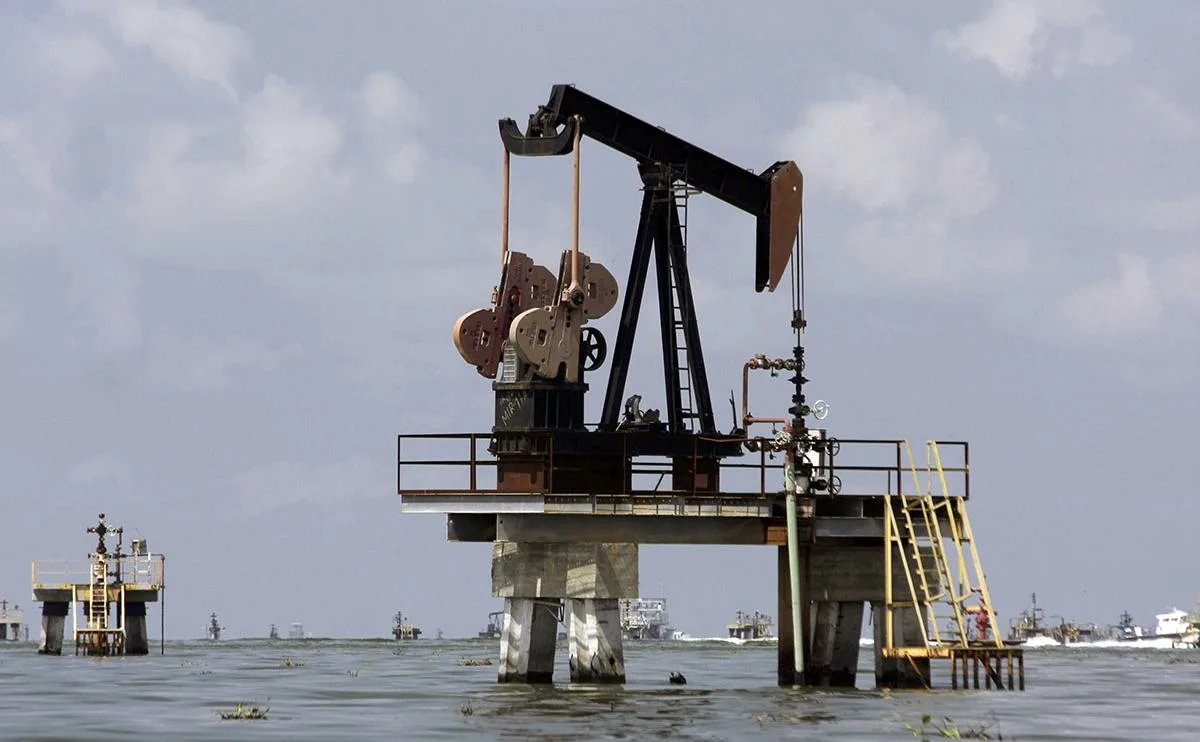
Shell has signed a number of agreements with Venezuela on cooperation in hydrocarbon exploration and production. The documents were signed on March 5, 2026, in Caracas at the headquarters of Petroleos de Venezuela S.A. (PDVSA).
Bergam’s Visit
The signing took place in the presence of US Secretary of the Interior and head of the National Energy Council D. Bergam, who arrived in Venezuela for talks on cooperation in the energy and mining sectors.
D. Bergam became the second minister to visit Venezuela after the January US raid, during which the country’s president N. Maduro was captured (in February 2026, US Energy Secretary K. Wright also visited Venezuela). During his trip, D. Bergam met with the acting President of Venezuela, Minister of Petroleum D. Rodriguez, and also took part in a joint meeting with her and representatives of the oil and gas industry.
During the talks, D. Rodriguez expressed the full readiness of the Venezuelan government to develop a joint cooperation programme with the United States based on respect and mutual benefit. She emphasized that this rapprochement opens new opportunities for strengthening relations between the two countries, positively affecting regional energy security.
Among other things, Shell agreements were signed during these events. D. Rodriguez assured that technical teams of both countries are already working on the implementation of projects resulting from “this historic meeting in Caracas”.
At the end of January 2026, the National Assembly of Venezuela approved the Law on Partial Reform of the Organic Hydrocarbons Law, aimed at regulating all aspects of exploration, production, collection, transportation, storage, processing, upgrading, refining, industrialization, marketing, conservation, and integrated use of hydrocarbons. The new law, among other things, reduced taxes, expanded the powers of the Ministry of Petroleum in decision-making, and granted autonomy to private producers. D. Rodriguez emphasized that the agreements with Shell already incorporate provisions of the updated Hydrocarbons Law with new business models.
Path to Dragon
On March 5, 2026, Shell signed several agreements:
- with the Ministry of Petroleum of Venezuela — a framework agreement and a technical and financial alliance to increase hydrocarbon production in the country. The documents cover offshore natural gas production (in particular, the Dragon project) and onshore oil and gas projects (comprehensive development of the Carito and Piritual production complexes located in the Punta de Mata (Monagas) area);
- with the Venezuelan engineering company VEPICA, which is expected to stimulate the development of the technological potential of Venezuela’s private sector to provide world-class technical solutions;
- agreements with the American companies KBR and Baker Hughes.
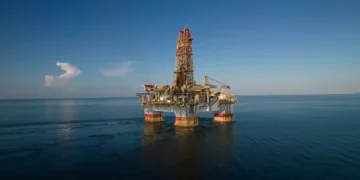
The key project underlying these agreements is the offshore gas field Dragon, which Venezuela shares with Trinidad and Tobago. This and several other gas fields in the Paria Peninsula area in the Caribbean Sea form the large-scale Mariscal Sucre gas project with total reserves of 416 billion cubic metres, including approximately 115 billion cubic metres at Dragon.
The operator of the Dragon field development project is Shell. The project is critically important for the company, as it will help address the gas supply shortage for liquefaction facilities in Trinidad and Tobago (the Atlantic LNG plant with a capacity of 15 million tonnes per year, where Shell holds 47.15%, bp — 47.15%, and Trinidad & Tobago National Gas Company (NGC) — 5%).
The implementation of the Dragon project is planned in two stages:
- production of approximately 5 million cubic metres per day of natural gas, construction of a pipeline to the Hibiscusfield in the waters of Trinidad and Tobago and further supply for liquefaction;
- construction of a second pipeline connecting the Dragon field with the coast of Venezuela to meet domestic demand.
However, the project had not progressed due to US sanctions against Venezuela and issues with obtaining exemptions. To carry out production and export of gas, Shell and Trinidad’s NGC had to obtain special US licenses due to restrictions on cooperation with PDVSA and revenue transfers. These licenses were repeatedly extended, revoked, and reissued. In April 2025, the United States revoked licenses issued for the development of the Dragon and Cocuina-Manakin gas projects under sanctions against Venezuela, but as soon as prospects of a policy shift emerged after the US operation in Venezuela, Shell and bp immediately applied to the Office of Foreign Assets Control (OFAC) for licenses to produce natural gas in Trinidad and Tobago and Venezuela.