Exploring Unconventionally!

David Bamford
It can be argued that over the last 20 years or so, offshore explorers have become ‘lazy’, relying on regional 3D seismic to bring them success.
This will not be possible when explorers turn to looking for unconventional resources onshore; the innovative use of technology will be the key to explorers “going back to the future” and returning to onshore exploration.
In this article, I assemble some relevant exploration technologies in order (roughly) of increasing resolution and focus.
Remote Sensing & Seepage
Satellites can on occasion offer evidence of recent topographical changes. Perhaps one of the better known examples are the observations of surface elevation above the Ghawar oil field of Saudi Arabia, seeking changes presumed to be due to the reservoirs compacting as oil was produced.
However, the results were not as expected(1) and not uncontentious(2)!
Satellites also offer information on petroleum seepage, and this is currently the most active form of remote sensing.
It’s important to distinguish between macro-seeps and micro-seepage.
Macro-seeps are the individual observable seeps that have been known for a long time – mentioned in the Bible, used to locate wells in the early days in Persia and Iraq (find an anticline with a seep on top, figure out the internal geometry of the fold, drill in the right place) – the sort of thing BP was chasing in the late ‘80’s/early ‘90’s with firstly ALF (airborne laser fluorescence) and later a pair of expensive sunglasses, and then sending ROVs down to inspect chemo-synthetic communities living on seeping oil on the seabed.
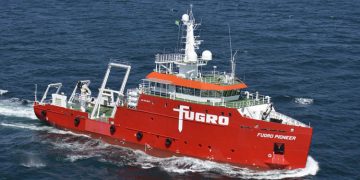
Nowadays, the technology of choice tends to be satellite-based SAR and companies like Fugro NPA (now part of CGG) offer this as a service. A couple of their Finding Petroleum talks(3) are a good example of what you can do: the need to avoid false positives (Iraqi supertankers always flushing their tanks in exactly the same place, for example), the need to get out there and take samples.
There tend to be two arguments about macro-seeps. Firstly, slightly facetiously, is seeing one a good thing or a bad thing – are they evidence of a working petroleum system or proof that traps are simply leaking? Usually, you can figure out the fluid pathways by looking at regional seismic data. Secondly, and more seriously, is there any way they can or should be used for de-risking prospects – when you have a sample of the oil, does geochemical analysis tell you that it has ever sat in a reservoir or is it recently generated oil and the seep is simply sitting at the end of a migration pathway?
I think the sensible approach is simply to regard such seeps as proof of a currently working petroleum system which can probably be typed by geochemistry to a plausible source rock,
In seepage terms, macro-seeps are the big signals and micro-seepage is the background noise, being more widespread and much less obvious. There are two different approaches to thinking about the latter. Firstly you can attempt to sample micro-seepage directly: this is what GORE Surveys for example say they do. They have done a couple of Finding Petroleum presentations(4)(5) which are a good summary of their technology, deployable both onshore and offshore.
Alternatively, you can appeal to the reasonably well documented thought that seepage will affect both soil chemistry and/or vegetation and deploy a technology that will pick this up. There are several examples but again satellites can be used for this, with the Soviet Union having decided this was a good idea…. Scotforth has inherited some of this Soviet thinking and have done a couple of Finding Petroleum presentations(6) on this subject.
Micro-seepage observations using any technology sometimes produce deep scepticism on two levels. First of all, the proponents are thought to play somewhat fast and loose with the question of ‘what is signal, what is noise?’! Secondly, I believe that it is still true that nobody has ever demonstrated that a sample of micro-seeped oil ever spent any time in a reservoir so claims that this approach can be used to de-risk prospects should be treated with (extreme) caution.
Perhaps the best that can be said is that such seepage may demonstrate a currently working petroleum system.
One thought would be that much of the scepticism, many of the diverse opinions, about seepage in general relate to whether or not it offers any evidence at all of petroleum that has migrated away from a source rock into a trap of some sort. This is a pre-occupation of conventional exploration.
It may be that seepage offers a different perspective when thinking about unconventional exploration where the focus is on shale oil or shale gas. Could seepage observations and sampling for example help locate the «sweet spots» in a shale play?

Conventional Gravity & Magnetics
Most access to conventional potential field data – gravity and magnetics – is via regional data bases such as the careful compilations (still) offered by Getech for the Middle East, substantial parts of Russia and the FSU, parts of Africa, and so on.
Such data is useful at the basin scale, for example for mapping ‘basement’, revealing structural grain etc but does not have sufficient resolution and lack of ambiguity for modern ‘surgical’ exploration. Also it is difficult to reconcile/integrate magnetic models with seismic.
However, the advent of Full Tensor Gravimetry (FTG) has improved resolution markedly and, integrated with modest amounts of 2D seismic, this has emerged as a powerful exploration tool. ArkEx have written an excellent summary of the technology which you will find here(7).
A Canadian company, NXT Energy, offers an airborne gravity-based technology which is based on the premise that the earth’s gravity field is locally distorted by stress (tectonic stress, affecting fracture orientations and so on) and that this in turn relates to (or even controls??) the distribution of fluid traps, and that these can therefore be detected by using airborne ‘rotational gravity’ surveys.
Passive Seismic
Typically this technology involves deploying up to a hundred or so long-term recording nodes to ‘listen’ to one of two seismic sources:
» Either natural earthquakes at considerable distances from the recorders
» Or ‘earthquakes’ induced by a field activity such as “fracking” or water injection, in the vicinity of the recorders.
With natural earthquakes as sources, the fundamental notion is that the compressional waves arriving from the earthquake are, for last few seconds of their path, travelling near-vertically through the sedimentary section of interest. The frequency content of these P waves is deemed to be altered by varying amounts depending on exactly what rock-and-fluids are being traversed. In particular, it has been asserted that the presence of hydrocarbons has a significant impact on attenuation, enabling petroleum-bearing reservoirs to be identified. This proposition is not without opponents.
Nevertheless, I have seen examples where reverse time migration of such compressional waves through a well-defined velocity model (derived from 3D seismic) seems to locate a zone of “anomalous attenuation” in both a known and a nearby, postulated, oil reservoir.
As remarked, this has been regarded as technically contentious, and it is interesting that Spectraseis, who were one of the leading advocates and suppliers of this approach, have re-located from Zurich to Houston to deploy their equipment on the other type of passive source.
To observe induced ‘earthquakes’ as sources, the recording equipment is near to where “fracking” itself, disposal of “fracking” fluids or conventional water injection is taking place, monitoring the small shocks that either do or may occur during these processes. In theory, this has two or three benefits:
» The ‘shock’ can be precisely located, allowing it to be shown whether or not the fracture has remained confined in the target reservoir interval.
» As with natural earthquakes, it is possible to construct fault plane solutions which demonstrate fracture directions.
» Assocaited events, involving “fracking” fluids or water, can be precisely located,
Micro-Seismic Inc. and now Spectraseis are two of several companies active in this field.
Conventional Seismic
Modern 3D lies at the heart of modern offshore exploration, integrating stratigraphy, sedimentology, facies prediction, rock physics, hydrocarbon phase prediction on the regional and prospect scales, and then providing a ‘surgical’ tool for choosing exploration well locations.
It is a fact that such integration is much rarer onshore; 3D seismic plays a much lesser role.
There are two significant issues with respect to the use of conventional seismic onshore, especially 3D.
The first is Cost.
The second – specific to the pursuit of shale oil and shale gas – is whether our use of Seismic Attributes, honed for exploring for oil and gas in porous sandstones and, to some extent, carbonates, can be developed so as to be useful for shales.
What about Costs?
Here’s an example I heard about a while ago, namely exploration in the Llanos foreland of Colombia where ‘everybody now explores with 3D seismic’, leading to success rates as high as 75% – pretty remarkable in an onshore environment. The terrain is this area is moderately undulating ‘cow country’ so relatively straightforward for acquiring 3D…..and yet the cost per sq km is roughly an order of magnitude, ten times, that of offshore multi-client 3D…so we are talking $25-30,000 per sq kms.
Step back into the Llanos fold belt itself, and the cost is more like $100,000 per sq km.
Why so? Why these differences? How can we pay so much!
My contention is that onshore seismic has simply not yet seen the acquisition technology breakthrough that transformed offshore 3D over 15 years ago.
As my old friend Ian Jack has pointed out many times, supported by Bob Heath of iSeis, both at Finding Petroleum events(8)(9), one absolute key is the slow pace and man-power intensive nature of using cables, and that the first breakthrough we seek is the advent of light-weight, long-life, wireless systems.
The second breakthrough has perhaps already been made – the almost routine use of ‘simultaneous sweep’ Vibroseis, initially proven by BP in the deserts of North Africa but now finding application more widely.
Taken together, ‘simultaneous sweep’ and ‘wireless recording’ will dramatically reduce the cost (per sq km) of onshore 3D.
I am fully aware that it would be unreasonable to expect onshore 3D seismic prices to drop to the level of offshore multi-client data, largely because onshore seismic crews have to contend with a variety of terrains and topographies and because significant numbers of people will inevitably be involved in deploying onshore seismic equipment.
A better message than a simplistic ‘cheaper please!’ is that the cost of onshore 3D needs to be at the point where shooting it extensively – so it can be used for regional and prospect work – fits neatly into the ‘gradually focussing your onshore exploration’ approach.
What about Seismic Attributes?
Kimmeridge Energy’s analyses show that the economics of a US shale play can vary considerably depending whether you are in the ‘core’ or ‘non-core’ of that play. Post-drill of course definition of what is ‘core’ or ‘non-core’ is relatively straightforward, especially when there is a huge data base with which to work – of well logs, cuttings, core, flow rates etc; the whole lends itself to statistical analysis. In a data-rich basin, this analysis may even be possible pre-drill; as Kimmeridge Energy put it “defining the core relies on mapping optimal convergence of various technical attributes”, for example mineralogy, depth, thickness, porosity, permeability, fracturing, TOC/R0, S1 for the ‘target’ shale(10).
I question how many North American players will be able to successfully translate their US and Canada experiences to the international scene? Costs are likely to be higher almost anywhere on the planet outside North America and so defining the ‘core’ – the ‘sweet spot’ – of a shale play pre-drill will be absolutely critical; to do this, companies promising to succeed internationally will need access to key skills, perhaps especially in petroleum geochemistry, that have been neglected in the pursuit of offshore, especially deepwater, provinces.
Also, the amount of data, and perhaps especially its quality, will be significantly less than that typically found in the USA.
And if we believe in historical analogues, we can point to the relative failure 20-25 years ago of many companies, with skills honed in the even then extremely, and relatively, data-rich USA and Canada, to succeed in international settings.
So whilst there has been a logical focus on exploitation issues in thinking about exporting the US ‘shale gale’ to the Rest of the World – whether the necessary drilling & completions equipment exist in the required numbers elsewhere, whether public and political opinion will support exploitation, whether the necessary supporting workforce and infrastructure exists – my focus is on whether we actually know how to explore for these so-called ‘resource plays’ in an international setting?
Can geophysics help, specifically seismic technology? The immediate answer seems to be Yes; there have been several studies of the geophysical properties of shales with several recent examples prompted by the ‘shale gale’. It’s somewhat different from say mapping channel geometries in deep water clastic systems, and then predicting fluid fill and porosities from acoustic impedance or AVO, but it can be done.
For example, it seems that TOC is related to density, and density is of course a component of impedance and therefore in principle extractable from reflectivity.
Historical data also show that well productivity is a function of the induced fracture extent and how well the formation can maintain those fractures. ‘Frackability’, the propensity of the formation to fracture and maintain the fracture, is directly correlated with brittleness and thus an important additional requirement of predicting shale ‘sweet spots’ is to forecast brittleness, identifying the reservoirs tendency to fail under stress and then to maintain a fracture. Accessing Young’s Modulus from seismic data may help here(11).
This takes us into a novel area. The generation of oil or gas in a source rock generates micro-fractures and these fractures will then evolve under the action of natural differential stress in the earth, typically acquiring a preferred orientation over geological time. These micro-fractures then control first of all the likely movement of hydrocarbons within and through the source rock and also the innate brittleness of the rock. These aspects of geomechanics must then be linked to our ability to interpret seismic data; the simple summary is that three component (3C) seismic data brings an ability to use shear waves (and sometimes P wave velocity) to map fractures, an ability which cannot be achieved with conventional seismic data.
So, in principle seismic could be used to find ‘sweet spots’…………if it were not for the prices charged by cable-using seismic contractors!
Thus, at least in my humble opinion, two key questions are – can we use non-seismic techniques to focus our efforts in a play into a relatively small area, and then use cable-less seismic technology to acquire (3C) 3D at a “not losing your shirt” cost?

The integration Issue
So let’s suppose you are exploring for shale oil ‘sweet spots’ above one of the world’s great source rocks, in a tough regulatory environment where a key objective is to ‘make every well count’ and drill as few as possible.
At your disposal, you could have:
» Satellite (SAR) images showing a few active seeps and also possible petroleum-related variations in vegetation.
» FTG data (and some 2D seismic) revealing basin shape, structural grain.
» Some passive seismic data showing a small number of zones of ‘anomalous attenuation’.
» A semi-regional 3D survey, allowing a good geological model to be built.
» Seismic attributes from said survey.
» Some information on fracture densities and preferred orientations.
» Some micro-seep samples.
Powerful stuff.
You will also need large amounts of tracing paper and an old-fashioned light table!
Because I would assert that there is at the moment no other way of integrating all these different types of data and then visualising them together.
I wait for somebody to show me that I am wrong!
References
1. http://online.wsj.com/article/SB121002229576468609.html
2. http://www.theoildrum.com/node/3954
3. http://www.findingpetroleum.com/event/South_East_Asia_exploration_where_are_the_big_fields_hiding/80255.aspx
4. http://www.findingpetroleum.com/event/Advances_in_Exploration_Technology/01a.aspx
5. http://www.findingpetroleum.com/event/The_North_Atlantic_where_are_the_big_fields_hiding/07d6f.aspx
6. http://www.findingpetroleum.com/event/Advances_in_Exploration_Technology/01a.aspx
7. http://www.findingpetroleum.com/n/Insight_The_increasing_use_of_Gravity_Gradiometry_in_the_Exploration_Workflow/edb52e81.aspx
8. http://64be6584f535e2968ea8-7b17ad3adbc87099ad3f7b89f2b60a7a.r38.cf2.rackcdn.com/Jack.2013.OilVoiceForum.March.Rev3.pdf
9. http://www.findingpetroleum.com/event/Total_3D_seismic_onshore_a_disruptive_transition/975.aspx
10. http://730926bc1eaea1361e79-997641d029b6764b67dd905fd3aab10c.r8.cf2.rackcdn.com/2-%20Finding%20Petroleum%20presentation.pdf
11. http://www.arcis.com/?__hstc=112058779.b6776976b2e06c577cca323bb5f136.374477728528.1374477728528.1374477728528.1&__hssc=112058779.5.1374477