Gazprom Neft: We want to be at the Head of Changes and Development of the Oil and Gas Industry


Modern companies cannot remain successful without change. But where to look for innovations and how to successfully implement them? RB.ru spoke about the benefits of open innovation and the creation of a corporate accelerator for Gazprom Neft with Kirill Strizhnev, CEO of Gazpromneft – Technological Partnerships.
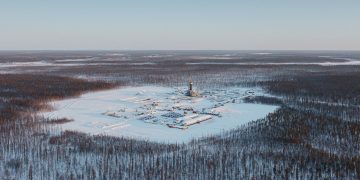
– Today we are working in conditions of a rapid decline in reserves of proven deposits. The main challenge for new assets is often the difficulty and high cost of developing them. To reach profitable production requires the creation of completely new approaches and technologies. In addition, the development of a number of sites is complicated by their remoteness and autonomy, since they are located in remote areas of Eastern Siberia or on the shelf.
Another important challenge is related to the diversification of products for the end consumer – today, through technology, we strive to maximize the beneficial use of all constituent hydrocarbons.
And finally, a modern oil company from a technology customer becomes a technology developer. We no longer just introduce innovations, but create them ourselves – to solve both our own problems and to overcome industry-wide challenges, and we begin to commercialize technologies in the external market.
– How did the introduction of new technologies in the oil industry affect the market as a whole, or how did it change it?
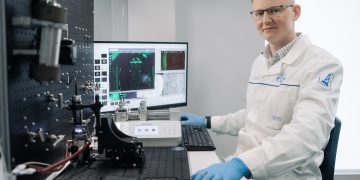
– The modern oil and gas industry is one of the most knowledge-intensive. Today it is also a driver of technological development for related industries. We have over 200 projects in our IT portfolio. And the effect of their development is already being felt. Innovation dramatically reduces costs. For example, the technology of hydraulic fracturing – hydraulic fracturing – used to increase oil and gas production, was created by Soviet scientists in the fifties of the XX century. Western companies have successfully adapted it to industry-specific tasks, commercialized it and presented it to the world as a finished product. It has improved over the decades. It would seem that today the potential for its development has been exhausted. However, together with mathematicians from MIPT, Gazprom Neft specialists have created a digital simulator for modeling a system of fractures in the rock – Cyber Hydraulic Fracturing. The program improves the efficiency of fracturing operations by helping to estimate future well inflows and costs for each operation. This digital product alone helped drive additional production from our standard wells at 5-10%.
– What does the concept of open innovation mean for Gazprom Neft and why are they given such a priority?
– We understand how fast technology is changing the outside world. To maintain this speed, maintain our position and become a leader in change, we must also change, this requires a new model of interaction with the external market. Without open interaction with the innovative world, without constant comparison of developments, it is very easy to become isolated and lag behind the rest. And we want to develop and be at the head of this process.
Our model of working with open innovations includes interaction with a network of Russian universities – among them Moscow State University, MIPT, SPbPU, TPU and others. With each of them, we are building a partnership program and joint technology projects. And every student knows about these developments from the first year and can become a part of this program, contribute to the creation of new products.
The second part of working with open innovation involves interacting with the oilfield services market. We create challenges and share them through various platforms – our accelerator INDUSTRIX, the New Industry Ventures fund (New Industry Ventures – a joint venture fund of Gazprom Neft, Gazprombank, Russian Venture Company (RVC) and VEB Ventures) and a system of technology partnerships. For example, we have more than 10 joint projects with a large metallurgical company, in which we are investing at the development stage.
Our main principles are to speak openly about the technological challenges faced by the company, build partnerships and, together with representatives of the external innovation environment, develop technologies, share intellectual property and commercialize the results.
– Are there enough internal ideas for the further development of the company’s business? Why did you need to launch an acceleration program?
– The launch of the INDUSTRIX technology development program, of which the accelerator is a part, speaks of our maturity and readiness to work according to a new model. We know how to work with the external market: negotiate, build technological partnerships and be a strategic partner for startups, with whom it is pleasant and comfortable to work. We know that we can form an innovative environment, create interest in it. And as a large energy company, we understand that we have to participate in the energy transition, to contribute to the development of “green” technologies and the transition to alternative fuels. In August, we finished scouting projects for INDUSTRIX and we can say that areas of “green” technologies, such as CCUS (carbon capture, utilization and storage) – carbon capture and storage, hydrogen and RES – renewable energy sources, now fall into the focus of common interests of startups and businesses. We see high commercial and technological potential in a number of presented solutions. We will continue to work with such projects, test them in real conditions and, if successful, we plan to carry out joint scaling. By investing in carbon-free technologies today, we are laying the foundation for our long-term development.
– What are the main industry challenges you want to apply startup solutions to? How do you see the place of startups in the technological development of Gazprom Neft?
– The priority for us is to create solutions to improve the efficiency of current assets, increase the efficiency of work with our strategic rates, create new materials and breakthrough technologies. There is also a functional division, according to the cycle from prospecting to the direct development of the field. These are geological exploration, construction of infrastructure for production, pumping, primary processing, and so on.
The main task of the INDUSTRIX program is to form a wide pool of high-quality technological solutions with a sufficient market volume and a strong team that will have the opportunity to realize their ideas and grow with us. We are talking about the development of an idea to a ready-made business and its further scaling. We are also interested in projects that can be commercialized not only in the oil industry, but also in related industries.
– Are there any peculiarities in cooperation with start-ups in the field of oil production? How long does it take on average to integrate the right solutions? How much will it take to scale?
– We have introduced a system of project methodology for technological projects – they go through all stages of maturation. Now, to the level of technology development in the international TRL classification, we have also connected commercial maturity for each project and each technology – CRL. We started to connect this commercial component from the very beginning at the very early stages of the project. After all, it is very important for every startup to understand when the product will start making a profit.
If the project starts at the earliest level, even before the appearance of an industrial prototype, when there is only an idea or an application for an invention, then the acceleration program will last about a year. Today about 500 projects have been announced for the acceleration program. After evaluating and identifying the best solutions, 10-12 projects will remain . They will be included in our technology management system and in a short time will be able to test the solution, form a business model and enter the market with it.
In the future, there are plans to include such a tool as an incubator in the INDUSTRIX technology development program. Unlike an accelerator, it is aimed at working with projects at the earliest stage of development. As part of the incubator, it is planned to actively interact with the university environment, in particular, Gazprom Neft specialists will act as experts and mentors for student teams and help them launch innovative initiatives.
Tools for working with innovations in each project life cycle – from idea to implementation – will contribute to the creation of an effective system for building technology businesses and the development of an ecosystem of partnerships. The open innovation system is an important tool for the development of the entire industry, which will help us not only strengthen our position in the changing world of technology, but also become a catalyst for change.