Igor Sechin: Made a Keynote Speech at a Special Session at the XIV Eurasian Economic Forum in Verona

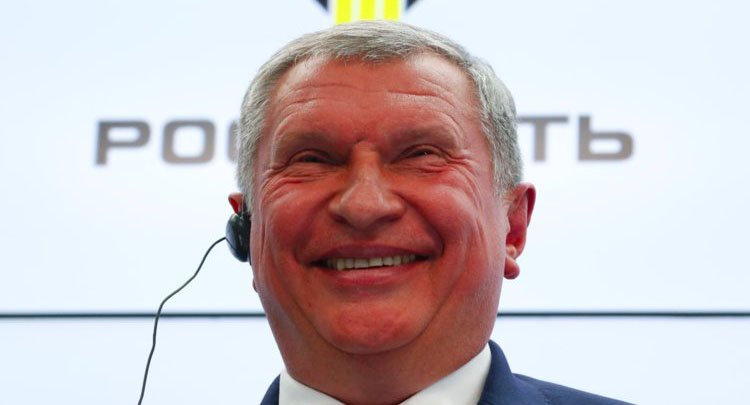
Rosneft Chief Executive Officer Igor Sechin made a keynote speech at a special session “Reliable Energy and Global Energy Transition” at the XIV Eurasian Economic Forum in Verona (Italy).
The event was also attended by ex-Chancellor of Germany and Chairman of the Board of Directors of Rosneft Gerhard Schroeder, Deputy Prime Minister, Minister of Foreign Affairs of Qatar Mohammed Ben Abdel Rahman Al Thani, Minister of Oil and Natural Gas of India Hardeep Puri, Chief Executive Officer BP Bernard Looney, Chairman and CEO of Trafigura Jeremy Weir, Chairman of the OGCI Oil and Gas Climate Initiative Robert Dudley, Former CEO of Glencore Ivan Glasenberg, President of the Discover Eurasia Association and Chairman of the Board of Directors of Banca Intesa Antonio Fallico, Chairman of the Board directors and CEO of Baker Hughes Lorenzo Simonelli, senior vice president of ExxonMobil Neil Chapman, as well as other representatives of the business community, politicians,experts and analysts.
PERIOD OF UNCERTAINTY
The head of Rosneft, in his report on the topic “The need for structural changes in the economy and the future of the energy sector,” presented a detailed analysis of the situation in the global economy, highlighting the period of uncertainty that remains due to the difficult epidemiological situation. According to Sechin, the pandemic continues to be a key factor affecting the situation in the global economy: despite large-scale efforts, herd immunity has not yet been formed, new dangerous strains of coronavirus are ahead of vaccination.
“Universal solutions to the pandemic problems have not yet been found, new strains and diseases may await us. We have entered a new era when improved diagnostics, accumulated knowledge and modern clinical approaches make it possible to detect more than 1,200 new diseases per year. Unfortunately, we cannot yet answer the question which of them pose the greatest danger to the future of mankind, ”Igor Sechin said.
In his opinion, green energy companies should also care not so much about the rapid growth of capitalization by increasing prices for consumers, but about ensuring a consistent energy transition that does not create shocks for the economy and consumers.
Global supply chains, including maritime transport, railways, road and air transport, were not prepared for surges in supply and demand. “Deliveries of not only finished goods, but also raw materials are disrupted, which was well shown by the recent situation with the tanker that blocked the Suez Canal,” Sechin said.
The modern industrial model, which implies work “on wheels”, with minimal inventory, when raw materials or goods received from suppliers are immediately sent to production, allows to reduce costs. However, the use of this model significantly strengthens economic ties, and as a result, the importance of reliable operation of the infrastructure comes to the fore, said the head of Rosneft.
The importance of inventories has been well illustrated by the current gas crisis in Europe. Due to a lack of long-term contracts, gas storage facilities were only 75% full, compared with a 10-year historical level of 90%. Against the backdrop of growing demand, the limited possibilities of alternative generation to ensure stable electricity supplies not only in winter, but also during more comfortable summer and autumn periods in terms of weather conditions have led to record gas prices.
Long-term contracts provide a certain stability of the gas market, but do not guarantee its full stability, as spot supplies are developing under short-term transactions, the head of Rosneft noted. Thus, the volume of supplies of liquefied natural gas under long-term contracts with Qatar could not meet the growing demand. At the same time, Europe’s hopes for spot supplies of LNG from the United States also did not materialize.
“In addition, the situation in Europe is complicated by the growth of the Chinese economy, which grew by 2.3% even in the crisis year of 2020, and by the end of this year its growth rate will reach 8%, while the Eurozone economy will grow by 5%. The rapid recovery and growth of the Chinese economy has resulted in the country’s growing demand for all types of energy resources: compared to the previous year, oil consumption this year will grow by about 10%, and the demand for gas – by 7-8%, ”Sechin said.
He recalled that Russia, for its part, is helping to resolve the crisis as much as possible, ensuring the stability of gas supplies to Europe. At the same time, our country always fully fulfills all its contractual obligations.
“Despite the fact that we are now witnessing the politicization of energy issues, Russia remains the most important and most reliable supplier of gas to Europe, and we need to not only maintain, but also strengthen bridges of friendship and mutual understanding,” the head of Rosneft said.
INTEGRAL APPROACH
Igor Sechin noted that the current gas crisis once again confirms the thesis, which he has repeatedly expressed in past years, about the fragility of balances in energy markets and the risks associated with the acceleration of the energy transition and discouragement of traditional energy. The crisis has already begun to spread to other industries, he added.
Due to the rationing of energy supply in China, which provides up to 90% of the world’s production of magnesium, the production of this metal has dropped sharply. Deficiency of magnesium, used in the production of aluminum alloys, threatens the automotive industry and a number of other industries where these alloys are widely used, including in the manufacture of microcircuits.
“As a result, chip manufacturers choose the customers to whom they ship products at their own discretion, and thus take on a function of market regulation that is not typical for them. And since microchips are now part of almost any technology, from cars to toothbrushes, it would not be an exaggeration to say that they determine the direction of development of the world economy as a whole, ”Sechin said.
“All these factors make us think once again about the limitations inherent in the existing model of capitalism, which Russian President Vladimir Vladimirovich Putin spoke about recently – they all hinder finding solutions to the challenges of today,” said the head of Rosneft.
In order to prevent the crisis from spreading to the entire world economy, it is important to ensure coordination between regulators and suppliers, as well as consumers, whose demand determines economic growth. The world’s largest exchanges, such as New York, London, Shanghai, which are the registration centers for most transactions, could also register long-term contracts for the supply of energy, thereby helping to balance the markets, Sechin said.
“The priority of global economic development should be an integrated approach with an emphasis on increasing the contribution of key sectors, which include energy, new materials, information technology, electronics, pharmaceuticals, agriculture, transport and logistics,” said the head of Rosneft.
RELIABILITY OF SUPPLIES
In his opinion, the issue of technological feasibility of the energy transition is also important. The International Energy Agency estimates that by 2050, about half of the technologies needed to meet low-carbon goals will still not be ready for deployment. At the same time, there is an increase in competition for financing on the market: green energy receives more and more significant subsidies, which distorts its real profitability, which is still quite low. “This leads to the development of a new type of subsidized industries that absorb resources from other sectors and impede the implementation of the principles of free competition,” Igor Sechin said.
To implement the energy transition, the structure of the world economy must change, says the head of Rosneft. “The energy transition must be synchronized with the provision of energy resources, reliable supplies of metals and other materials, the development of technologies, as well as the adaptation of consumer behavior. Without this, the basic concept, reflected in the very word “transition” as a process evolving over time, will be inoperative, ”the head of Rosneft believes.
“The energy transition should not be an end in itself, its primary task should be the reliability of energy supplies,” Igor Sechin summed up.
IMPACT ON THE ECONOMY
Erroneous decisions in the field of climate policy can lead to serious negative consequences for the entire world economy and society, said the head of Rosneft. “Against this background, the demands to stop investing in oil and gas are being heard more and more. One gets the impression that in some cases, proponents of an early move away from fossil fuels ignore the risks of imminent imbalance in markets, ”he said.
The head of Rosneft recalled the decision of the Dutch court in The Hague, which ordered Shell to cut emissions more significantly than its strategy envisaged. The company was accused of “inappropriate public behavior” and human rights violations. Sechin noted that the court had to refer to human rights, since it is objectively impossible to come to an unambiguous conclusion about how much the company is guilty of global climate change.
“As absolutely rightly noted by the President of the Russian Federation V.V. Putin, “if people who are completely unprepared professionally make decisions (on reducing greenhouse emissions), then surges in world markets are inevitable,” said the head of Rosneft.
Sechin believes that the risk of new lawsuits of this kind is quite high. “It is not only oil and gas companies that are at risk, but also banks and investors who may actually be prohibited from investing in oil and gas,” said the head of Russia’s largest oil company. – Thus, in addition to the economic coordinate system, an alternative system is being introduced, based on climatic pressure and even blackmail, excluding the basic principle of economic efficiency. At the same time, the social responsibility of market players is ignored, on which the well-being of people in general depends to a large extent. “
In his speech, Igor Sechin raised the question – what is the real purpose of lawsuits that destroy corporate law and thereby violate the shareholders’ ownership of the results of their investments? “We have come across completely new methods of pressure from shareholders and activists on companies, when, formally acting in accordance with the norms of corporate law, some shareholders pursue their own policies, worsening the position of investors, partners, employees, clients. This situation requires additional legal analysis and the development of protective measures, ”he said.
Sechin also noted that since the beginning of this year, the whole world has witnessed a sharp rise in gas prices in Europe, mainly associated with excessive confidence in the reliability of alternative generation. However, recent events show that the stability of wind strength is overestimated, the head of Rosneft believes. According to climatologists, wind strength in Europe in September-October this year was 15% below historical levels.
“Excessive confidence in the reliability of wind generation was one of the reasons that led to insufficient gas reserves in storage facilities. And only with the approach of winter, our European partners began to seriously think about the risks, about the real unavailability of renewable generation (at the current level of technology development) to ensure stable energy supplies. All this led to record gas prices, which have grown 5 times since the beginning of this year and now threaten the long-term economic recovery of Europe, ”Igor Sechin said.
The desynchronization of the dynamics of commissioning of renewable generation capacities and the lack of reserve capacities along with the accelerated rejection of traditional energy contributed to the deterioration of the situation. The “molecules of freedom” that the American LNG carries with it, widely advertised by the previous US administration, also played a role. While promising to significantly increase gas supplies to Europe, in reality, the United States first of all increases them in a completely different direction – to the countries of the Asia-Pacific region, Sechin emphasized. “As a result, in oil equivalent, the price of gas in Europe reached $ 200 per barrel, which is more than double the price of oil,” he added.
According to Citi and Goldman Sachs, ultra-high natural gas prices could create additional oil demand of up to 1 million barrels per day, which will trigger an imbalance similar to gas, and further “heat up” oil prices.
“Also, under pressure from climate activists, the implementation of joint projects with international companies is terminated, forcing the majors to reduce investments in oil and gas production, redirecting funds to renewable energy. It is the climate agenda that is now putting pressure on the world oil and gas market, ”Igor Sechin believes.
“The risks posed by a move away from oil, as well as from low-carbon gas generation, and from the use of coal must be fairly weighed. The forced return to coal to ensure the stability of electricity production makes us rethink not only the timing, but also the need for the declared complete rejection of traditional generation, ”he said.
IMPACT OF LOW-CARBON ENERGY ON CLIMATE
In his report, Igor Sechin also presented a detailed analysis of the existing plans for decarbonizing the global economy. “First of all, it is necessary to answer the question – what problems are we trying to solve with an accelerated energy transition? And will low-carbon solutions really help to provide energy for future generations? ”- urged the head of Rosneft.
Igor Sechin noted that there is still no unambiguous answer to the question of which energy sector should be considered “green” or low-carbon. He recalled that after the accident at the Japanese nuclear power plant “Fukushima” in 2011, which occurred due to design errors, negative public opinion led to increased demands for a complete abandonment of nuclear energy, even despite engineering improvements in the design of nuclear power plants and increased protection measures.
As a result, in 2020, the volume of energy production at nuclear power plants in the UK decreased by 27% compared to 2011, in Germany the decrease was 41%. Even in France, where nuclear generation accounts for 2/3 of electricity production, the volume of generation at nuclear power plants has decreased by 20%.
At the same time, the gas crisis of 2021 led to the fact that a number of European countries intend to rethink their low-carbon goals. Thus, at the beginning of October, at the initiative of France, 10 countries of the European Union addressed the European Commission with a proposal to recognize nuclear energy as low-carbon.
It should be borne in mind that nuclear fuel also needs disposal, which is more costly and requires special technologies, because the environmental risks are much more serious here, Sechin noted.
“It is necessary to take a comprehensive approach to assessing the safety of energy resources for people and the environment along the entire technological chain. In the case of the same hydrogen, on which very high hopes are pinned as a promising “green” fuel of the future, we must not forget that its explosiveness has caused a number of disasters in nuclear power and chemical industries, ”said the head of Rosneft.
Adherents of decarbonization do not take into account a number of other factors that impede the implementation of their ideas. A serious problem is the rise in prices for the materials needed to ensure the energy transition. Igor Sechin recalled that the development of renewable energy technologies helped to reduce the costs of its production, which helped it strive for competitiveness with traditional energy. In the current situation, this trend may reverse.
“Compared to the pre-crisis level of 2019, the cost of polysilicon, a key raw material for the production of solar panels, has quadrupled. Also, since the beginning of 2019, the prices for manganese, lithium, and the rare earth element neodymium have more than doubled, “Sechin said.
At the same time, emissions from mining and processing of metals for low-carbon energy do not meet the goals of sustainable development. “The production of metals and other materials required for low-carbon energy is often accompanied by high carbon emissions during their extraction and processing,” said the head of Rosneft.
According to the International Energy Agency, greenhouse emissions from lithium production are three times those from steelmaking. Nickel and aluminum surpass steel by 7-8 times in emissions, and rare earth metals by 50 times. To provide the world with such important metals, it is necessary to introduce resources with the worst characteristics into development. As a result, greenhouse emissions from lithium production for future projects, according to the International Energy Agency, may be 3-4 times higher than for current ones, and for future projects of nickel production – 6 times higher.
Advocates of an accelerated energy transition, campaigning for the expansion of the use of renewable energy, ignore such an important aspect as the deterioration of equipment and its subsequent disposal. “It’s no secret that in the public mind, the development of renewable energy is perceived as a one-time investment in an environmentally friendly source of energy, which can serve for a very long time – 40-60 years, as objects of traditional energy, or even longer. But in reality, the service life of wind power plants is only about 20 years, ”Igor Sechin said.
Taking into account the fact that wind generation began to spread quite widely in the early 2000s, it is already necessary to replace the wind turbines installed at that time. At the same time, the blades of the wind turbines are not recycled, but fill the landfills. The dirty legacy of green energy that humanity leaves for future generations is growing rapidly.
If in 2020 about 40 thousand tons of blades decommissioned around the world needed to be recycled, then by 2025 their number will grow to 100 thousand tons per year, and as wind generation continues to spread and the service life of previously commissioned installations expires will continue to grow.
“Similar problems arise in the case of solar panels, the actual service life of which is significantly less than the 30 years expected by the industry,” said the head of Rosneft. In 2035, 2.6 times more panels are to be disposed of than new ones will be sold. Due to their high content of heavy metals, solar panels are toxic and require specialized recycling, which is 10-30 times more expensive than sending it to a landfill.
“All these facts should make the proponents of the energy transition think about the true impact that low-carbon energy has on nature and the climate, and whether such energy can fully become truly clean and green,” Igor Sechin said.
ENERGY TRANSFER IS POSSIBLE
The head of Rosneft noted that the energy transition is only possible if the stability of energy supplies and the development of new materials and technologies are maintained. He recalled that the belief of climate activists in the unlimited possibilities of renewable energy has not yet been backed up by reliable technologies. “Research is required and the search for new, less energy-intensive and toxic materials that can be used for the production and storage of energy and will replace the current ones,” Sechin said.
Moreover, forcing companies to withdraw from oil and gas projects does not solve the problem of reducing emissions. “Achieving carbon neutrality goals does not require a complete rejection of not only oil and gas, but also coal,” he said.
According to him, the development of new materials is no longer an energy issue, but a much more serious issue of changing the structure of the economy. “In fact, despite the variety of plans to achieve carbon neutrality, without serious development of new technologies and materials, the energy transition will remain a pipe dream,” said the head of Rosneft.
He recalled that the International Energy Agency released a highly publicized low-carbon forecast that calls for achieving carbon neutrality by 2050 and ending investments in new projects in the oil and gas industry now. “But even in this forecast, traditional energy resources in 2050 in total will provide 39% of global demand,” Sechin said.
The head of Rosneft believes that India will become one of the key drivers of global oil demand growth in the long term. According to the forecast of the Ministry of Oil and Gas of India, by 2050 oil consumption in the country will double (to 452 million tons, or up to 9 million barrels per day). Oil will provide 1/5 (22%) of the country’s energy consumption.
“We need to make decisions now to ensure that future demand is met. Otherwise, we will face a new aggravation of the deficit and a rise in prices, ”Igor Sechin emphasized.
The head of Rosneft noted that another significant factor in reducing carbon emissions could be a change in consumer behavioral preferences. According to the IEA, this will allow by 2030 to reduce carbon emissions by 2 billion tons. home and other similar measures.
Climate pressure is already having a negative impact on energy. If in 2011-2015 the world’s leading oil and gas companies invested an average of $ 16 billion in geological exploration, then last year the cost of replenishing hydrocarbon reserves fell by 3 times, to $ 5 billion. As a result, the level of oil and gas reserves replenishment in the world has been declining for the fourth year in a row and the risks of supply shortages are already being included in prices, negatively affecting the incomes of European and world consumers, said the head of Rosneft.
According to him, amid uncertainty about long-term demand and oil prices, a significant number of oil and gas companies do not plan to increase investments. “As a result, global investments in oil and gas projects in 2021 will be 2 times lower than in 2014. Taking into account the decline in production at the existing fields, investments are required to develop new reserves. Based on the current trends in the implementation of projects, the accumulated deficit of investments necessary to meet the demand for oil in 2021-2025 may reach 135 billion dollars, “Igor Sechin said.
If investments remain at the current level, then by 2030 their accumulated deficit, according to the JP Morgan bank, will reach $ 600 billion. Insufficient investments already today create risks for the stability of long-term supply of demand for oil and gas.
“The energy transition should be based not on the demands of climate activists, but on real economic laws, to provide return on investment and long-term growth in value while meeting the demand for energy resources and reducing emissions,” says Igor Sechin.
WHO WILL RECEIVE THE BENEFITS OF THE ENERGY TRANSFER
“The current trends in the reallocation of roles in the low-carbon technology market are of strategic importance. At the same time, it is important that it is the actions of the state in the context of the energy transition that form not only current competitive advantages, but also create opportunities for dominance in the energy market in the future, ”Sechin said.
According to the International Energy Agency, the energy transition and the associated growth in demand for electric vehicles in the next 20 years will lead to an increase in demand for lithium by 133 times, for cobalt – 33 times, for nickel – 30 times.
The growing demand for rare earth and non-ferrous metals is associated not only with batteries, but also with other components for electric vehicles, said the head of Rosneft. Electric vehicle engines that provide the highest mileage on a single charge use neodymium magnets. Demand for this metal is growing, and prices for neodymium oxide have increased by 90% over the past year.
“At the same time, the production of neodymium magnets is almost entirely located in China, which cannot but cause concern in a number of countries about the growth of economic dependence,” Igor Sechin said. This prompts both individual companies and entire countries to realize the need to build their own secure supply chains in terms of metals, he said.
The head of Rosneft recalled that in June of this year the US administration published a report in which it was forced to admit that the country’s economy is losing the competition to the European Union in creating incentives for the formation of sustainable supply chains and localization of the production of electric vehicles and batteries, and to Taiwan and other APR countries – in creating incentives for the development of semiconductor production.
“It is possible that to ensure guaranteed access to these resources, the United States may again resort to political pressure instruments,” the head of Rosneft believes.
The gas crisis of this year has clearly shown how the shortage of one of the energy resources can affect the prices and balances of the entire energy sector, Igor Sechin noted.
According to him, the discouragement of traditional energy leads to a reduction in investments required to maintain the level of production of traditional energy resources, which will cause a deficit and an even greater rise in prices.
“To prevent the global economy from sliding into such an energy“ inflationary spiral, ”approaches to changing the structure of the global energy sector must be balanced,” the head of Rosneft believes.
High energy prices will certainly slow economic growth and the era of relatively low energy prices, which has lasted for almost 100 years and which has become the main stimulus for the development of the global economy, may come to an end, he said.
“Globalization has led to the fact that large-scale changes affect all countries, and new trends in developed countries affect third world countries, whose population, deprived of elementary energy sources, is subject to the risk of disease and death,” Igor Sechin believes.
He noted that, having built their prosperity over the previous decades on inexpensive fossil fuels, developed countries now actually do not allow developing countries to do the same, forcing them to switch to expensive alternative generation, which only exacerbates social inequality.
“It would be unfair if the largest countries consuming energy and metals continue to put pressure on developing countries with enormous natural potential,” said the head of Rosneft.
He believes that more expensive loans for developing countries and additional restrictions often applied to them constrain their development opportunities and lead to an increase in their commitments and a reduction in the tools for implementing the energy transition. “This increases the risk that developing countries will remain in energy and economic poverty,” Igor Sechin said.
The head of Rosneft called for now to make decisions on actions beyond the horizon of 2050 and to prepare for larger-scale changes associated with the energy transition, since even having reached the goals set for carbon neutrality by 2050, humanity will still face its changes.
“The vision of the economy of the future will allow us to form the energy of the future that is adequate to it. However, the costs and efforts to create such an energy sector should be adequately distributed between energy producers and consumers, “Igor Sechin emphasized.
ANSWERING CLIMATE CHALLENGES
According to Sechin, the gas crisis once again clearly demonstrated the multicomponent and complexity of the energy and economy and the fragility of many established systems, as well as the fact that a number of new technologies are not yet sufficiently developed to be relied upon safely.
“Therefore, I would like to emphasize once again that the process of the energy transition must be balanced, economically conditioned and socially responsible,” Sechin said.
In his opinion, the world community should develop a unified approach to the global climate problem and stimulate the development and exchange of technologies to reduce emissions, and not look for the culprit, and not use unilateral protectionist measures that increase the already significant gap in energy security between developed and developing countries. … “Despite the absolute importance of resolving environmental issues, the responsibility for greenhouse emissions is often (and wrongly!) Assigned not to polluting industries, but to producers of primary energy resources,” said the head of Rosneft.
At the same time, it is important that the ongoing stimulation of “green” energy does not replace its real economic efficiency and take into account emissions along the entire chain – from metal production to disposal of equipment for wind and solar power plants, batteries and electric vehicles, Igor Sechin believes.
“Only a reasonable balance between traditional and renewable energy can ensure sustainable long-term growth of the global economy. I am convinced that all participants in the global energy industry need to work constructively to reduce their carbon footprint, apply a balanced, professional approach to the energy transition, improve environmental performance and ensure not only reliability, but also flexibility in providing consumers with energy resources, ”he said.
At the same time, anthropogenic impact arises not only from the burning of fossil fuels, but also, for example, due to the expansion of the geography of agriculture, animal husbandry and other factors. In addition, global emissions from forest fires amount to about 8 billion tons of CO2-equivalent annually, which is comparable to the emissions of the entire industry.
“In this regard, Russia pays special attention to reforestation, recreating about a million hectares of forest annually. This is especially important given that the country has enormous potential for natural carbon sequestration. Already, Russia is making a significant contribution to the absorption of carbon dioxide through ecosystems, including forests, whose capturing potential is estimated at 2.5 billion tons per year, ”said the head of the Company.
According to Sechin, the Russian Federation has significant compensation potential due to the possibilities of storing carbon in depleted oil and gas fields and salt formations. According to industry experts, the potential for geological storage is about 1.7 trillion tons of CO2, he said.
The application of such compensatory measures is being considered by Rosneft within the framework of the Carbon Management Plan adopted in 2020 until 2035. This plan sets a number of ambitious decarbonisation targets: The Company is committed to reducing its exploration and production emissions by 30%, preventing 20 million hth of greenhouse emissions, reducing methane emissions, and ensuring zero routine flaring of associated gas.
Rosneft is also actively increasing production of the cleanest fossil fuel – natural gas. According to Sechin, the Company plans to increase its share in production to over 25%. Rosneft is currently implementing a program to utilize associated gas, developing environmentally friendly motor fuels and a network for charging electric vehicles at its filling stations.
Igor Sechin said that the Company is currently developing a new strategy, the main priorities of which will be adaptation to the challenges of the energy transition and the integration of the “green agenda” into business.
The Company’s efforts in this area are not ignored even today: Rosneft occupies a leading position in a number of specialized ratings of reputable international agencies and continues to improve them. The Company’s activities have also been recognized by shareholders. Over the past 5 years, the total income of the Company’s shareholders has practically doubled (an increase of 90.9%), while for the world’s leading oil and gas companies this indicator was 5 times lower – about 20%.
Over the past three years, Rosneft has improved its energy efficiency by 15%, which made it possible to prevent emissions in the amount of 4 million tons of CO2-equivalent. The indicators of the intensity of the Company’s energy consumption are 40% lower than those of a number of the world’s largest oil companies.
According to Igor Sechin, in 2020, Rosneft’s green investments exceeded $ 580 million, and the reduction in emissions of pollutants into the atmosphere was 14%. Also, in order to counteract climate change, the Company plants young trees every year. In 2021, the number of planted trees has already exceeded 9.3 million.
At the same time, according to Igor Sechin, Rosneft is making every effort to ensure the stability of the supply of hydrocarbons, and the most important project for this is Vostok Oil. The use of advanced technologies to protect the environment from the well drilling stage to the specialized execution of pipelines and tankers that will export oil, will provide the project with a carbon footprint that is 75% lower than that of other major new oil projects in the world.
“Energy projects are capital-intensive and long-term, regardless of what energy resources are being developed. And the choice we will make now will determine the future of the world energy sector for decades to come, ”Igor Sechin summed up.
Former German Chancellor, Chairman of the Board of Directors of Rosneft, Gerhard Schroeder, in his speech dwelled on the causes of the current energy crisis. According to him, the key factor in the crisis was the economic recovery after Covid-19, after the suspension of production, when gas supplies significantly decreased. “At the same time, due to the rather warm winter, the storage facilities were used longer last winter. Thus, no additional deliveries were made to the gas storage facilities. In the summer, this led to an increase in prices, and, accordingly, an increase in demand, ”he said.
However, gas from the United States, which is being offered as a cheap alternative to pipeline supplies, does not currently enter the European market – it is supplied at higher prices to China and other Asian countries. This is the main factor behind the rise in gas prices in the world, Gerhard Schroeder emphasized.
“Considering these facts, the question arises: why do we only blame Russia for this global energy crisis? Are there any signs of competition between the US and Russia? Of course have. The Europeans would like to start a reasonable dialogue with the supplying countries. What’s at stake? Safe, reliable energy supplies to homes, ”he said.
Schroeder believes that the energy transition can only be achieved in the coming years through increased use of natural gas. “International energy security depends on the development of economic ties and is ensured by long-term contractual obligations, which have proven their reliability in recent years,” he concluded.
Deputy Prime Minister, Minister of Foreign Affairs of Qatar, Mohammad bin Abdel Rahman Al Thani, in his speech stressed the importance of realizing that the energy transition is not possible within a couple of years and requires significant investment. In his opinion, the demand for energy resources will constantly increase in connection with the recovery of the economies of developed countries after the coronavirus pandemic. “We see that investments in the energy sector have decreased. At the same time, population growth continues, the economy rises in developing countries. In this regard, we believe that the energy crisis is likely to be more long-term, ”Al Thani added.
Indian Petroleum and Natural Gas Minister Hardeep Puri agreed with Igor Sechin’s opinion that energy has become a very important aspect of national security of countries, especially against the background of today’s volatility of markets.
“High energy prices affect economic decisions. High prices increase uncertainties, negatively impact economic recovery, and most importantly, disrupt the pace of the energy transition. Such an unstable situation is not beneficial to either the producing countries or the consuming countries. Therefore, these phenomena must be combated until the price of crude oil is maintained at a sustainable level. Until then, it will severely hit the prospects for a global economic recovery, ”Puri said.
According to him, India stands for energy justice at all global platforms. “We have already said that in order to meet the growing demand in the country, we must explore all supply options that are sustainable, safe and affordable. India and the Eurasian Economic Union work closely together. And one of the main areas for cooperation is energy cooperation. We strive to further expand our cooperation, ”he added.
BP Chief Executive Officer Bernard Looney in his speech supported the position of the head of Rosneft, noting that as the industry transforms, it is necessary to remember about the reliability of the energy system. “And we plan to work in this direction. Today we are already investing in a large number of new projects, and new projects will be initiated in Russia in the coming years. This allows us to pay our shareholders $ 4 billion annually in dividends, ”added Looney.
He also spoke about the work of the British company in the field of decarbonization. According to Looney, bp is currently actively investing in hydrogen projects, wind projects, and other modern technologies. “And I would like to say that we cannot do this alone. This is why we rely on partners. And one of our biggest partners is Rosneft, which employs tremendous professionals with tremendous resources and ambitions. And I think that this company is successfully moving forward under the leadership of Igor Ivanovich, ”he said.
The demand for fossil fuels today is quite high at about 80%, said former CEO of Glencore Ivan Glazenberg. “But we are also seeing demand for renewable energy sources. And we need to decide how we will combine traditional and renewable energy, and how we will compare this demand with the current level of supply in the commodity markets, ”he said. Glazenberg recalled that in the future, a multiple increase in the production of metals – copper, nickel, cobalt and others – is expected, which will affect prices in the commodity markets.
At the same time, one cannot simply stop mining and exporting coal, the former head of Glencore believes. “It is necessary to plan what source of energy will replace coal. We cannot expect the world to organize itself in any way. These are not toys. If we are promoting renewable energy sources, we need to carefully plan how we will replace one source with another. Zero emissions is a great goal. But this is only the goal. It is not enough just to set goals, you need to understand how we will achieve them, ”he summed up.
“Such investments that Rosneft is making today are of colossal importance. The implementation of the Vostok Oil project is critical for the future of the global energy sector, as it will allow us to ensure timely and necessary production of gas and oil for the coming years, ”said Jeremy Weir, Chief Executive Officer of Trafigura.According to him, the process of recovery of the world economy after the pandemic is proceeding at an outstripping pace, which entails an increased demand for all natural resources. And the key task of suppliers is to meet the growing demand. However, this can be hindered by chronic underinvestment in key industries. “Unfortunately, this is a long-term trend. We see investment winding up despite rising demand. The situation is typical not only for the oil and gas industry. If we look at metals, there is also a gap here. For example, for cobalt, the gap between production and demand is at least 15%, ”Weir said.
In his opinion, one of the factors holding back the financing of projects is pressure on investors, prompting them to reduce support for projects related to fossil fuels. “We must find a way that allows us, as responsible producers, to ensure the stability of energy supplies. Because without this we risk losing our current ecological and social status. And in this matter the government plays a key role. Regulatory credibility and confidence should be increased, as well as long-term fiscal stability and infrastructure investment opportunities should be guaranteed, ”concluded the CEO of Trafigura.
According to the Chairman of the Oil and Gas Climate Initiative OGCI Robert Dudley , “existing power system can be very vulnerable.” “The energy transition will be costly and expensive. At the same time, it is necessary to maintain a certain flexibility, ”he said. At the same time, the transition to natural gas proposed by a number of experts cannot be a single solution, Robert Dudley is sure, – it can be used as an energy carrier for the development of hydrogen technologies.
“I would like to say that I am optimistic about the future. Over the past decades, the oil and gas industry has changed a lot, new resources have appeared, and they are now being distributed differently. I think that if we act together – consumers, producers and governments, we will achieve success, ”he summed up.
Lorenzo Simonelli, Chief Executive Officer of Baker Hughes, spoke of the need to develop technologies to reduce the carbon footprint . In his speech, he talked about the success of Baker Hughes in this direction. “We must continue to invest in digital technologies, look for new models for creating alloys, including metals. And besides, I would like to give an excellent example: during the pandemic, we carried out a feasibility study of the technology of remote equipment, the work of which is carried out without the presence of personnel on site. “
Hydrogen projects are also very promising, Simonelli said. “It is necessary to understand how we can develop this. We, as a high-tech company, will be present and will participate in this work, providing technology so that our ecosystem will allow us to jointly make this energy transition, ”he concluded.
The banking industry should actively finance low-carbon technologies, said Antonio Fallico , President of the Association “Explore Eurasia”, Chairman of the Board of Directors of Banca Intesa . According to him, the total investment in the so-called “green” bonds has already exceeded 1 trillion euros. “As a financial institution, we must have a balanced, but at the same time, environmental approach to our own investments,” he added. Falliko also noted that Russia’s energy portfolio is one of the cleanest in the world.
Neil Chapman , Senior Vice President of ExxonMobil, recalled that his company has been producing and processing hydrocarbons for 130 years. “This is our core business and will remain so for a long time, although, of course, we are going through a certain technological evolution. We understand what the world is striving for, but it is not clear how to achieve these goals, ”he said.
In his opinion, when introducing new technologies, it is important to keep in mind the already existing industries, such as the extraction and processing of oil and gas. “We believe that we need to work in such a way as to supply consumers with cheap energy carriers with low environmental impact. This is what we are trying to do now, ”he said.
PRESENTATION TO I.I. SECHINA AT THE XIV EURASIAN ECONOMIC FORUM IN VERONA