Japex Drilling a Potentially Revolutionary Offshore Well in Japan


Japan Petroleum Exploration (Japex) has begun drilling an exploration well on the Hidaka offshore area, Hokkaido, Japan.
This was reported by the company’s press service.
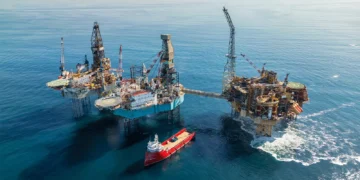
The well is being drilled approximately 50 km from the shore and 5 km northwest of an exploration well drilled in 2019at a depth of 1,070 m. Drilling operations are expected to be completed by the end of May. The project operator will collect data to assess natural gas reserves and reservoir quality. In addition, production testing will be carried out.
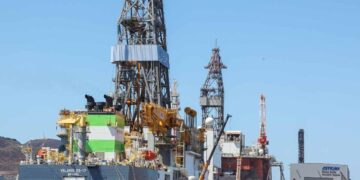
The previous exploration well was drilled on April 13, 2019, using the semi-submersible drilling rig Valaris 8504(formerly Ensco 8504) to a total depth of 2,530 m.
Japex’s exploration campaign was selected by the Agency for Natural Resources and Energy as a subsidized project under the programme “Subsidies for Geological Surveys for Domestic Oil and Natural Gas Development in Fiscal Year 2024.” Up to 50% of drilling costs will be covered by state funding.
Japan conducts very limited exploration within its territory and largely depends on imports of oil and natural gas to meet its energy needs. The Iwafune-oki field offshore Niigata Prefecture is the only offshore oil and gas field under development in Japan. It was discovered in 1983 and brought into production in 1990.
A Japex representative told Upstream that the company believes the Hidaka Trough has “significant potential,” and that “a potential success could dramatically change the situation and replace part of imported liquefied natural gas.” As one of the world’s largest LNG importers, Japan reduced imports by 1% in 2025 to 65.041 million tonnes. At the same time, imports of Russian LNG increased by 2% to 5.798 million tonnes. In January–February 2026, Japan reduced LNG imports by 3.6% to 12 million tonnes, while supplies from Russia exceeded 1.1 million tonnes, remaining at the level of the same period last year.
Japex is actively engaged in exploration and production worldwide, including in the United Kingdom and Norway. In 2025, the company decided to return to its core business after facing low profitability in the renewable energy sector.