New Gas Reserves Discovered at the Largest Field in the Philippines


The Philippine company Prime Energy, operator of service contract No. 38 (SC 38), has discovered new natural gas accumulations offshore Palawan on the continental shelf of the Philippines.
This was reported by the company’s press service.
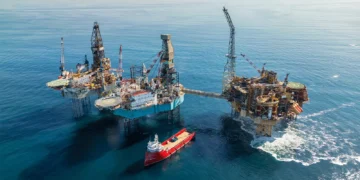
The company successfully tested the new Camago-3 well, which recorded a flow rate of about 60 million cubic feet per day (approximately 1.70 million cubic metres per day) of natural gas. The results confirm the presence of significant remaining gas reserves at the giant Malampaya field and are considered an important step in strengthening the Philippines’ energy security.
Despite the capacity of the Malampaya field — at least 500 million cubic feet per day (14.16 million cubic metres per day) — production has been declining for about 7 years and by 2024 had fallen to approximately 260 million cubic feet per day (7.36 million cubic metres per day). Against this backdrop, new discoveries are of critical importance.
According to Prime Energy, the potential of Camago-3 is approximately 2.5 times higher than that of the Malampaya East-1 (MAE-1) exploration well, where about 98 billion cubic feet (2.78 billion cubic metres) of gas had previously been discovered. This suggests that Camago-3 resources could reach approximately 250 billion cubic feet (7.08 billion cubic metres).
Prime Energy notes that the development of Camago-3 could significantly increase the recoverable reserves of Malampaya and effectively double the volume of gas available for production at the mature field.
The Camago-3 and MAE-1 projects are being implemented as part of the fourth phase of Malampaya development (Malampaya-4) with a value of 893 million US dollars. It is expected that their launch will extend the field’s lifespan by approximately 6 years and ensure stable gas supply for the power system of Luzon.
The company also highlights the economic effect: the cost of electricity generated from domestic gas is about 4.80 pesos per kWh, which is more than twice lower than generation from imported liquefied natural gas — about 10.30 pesos per kWh. This helps reduce dependence on global market fluctuations and contain tariff growth for consumers.
Thus, the development of domestic gas resources is becoming a key factor in improving the resilience of the energy system.
The next important stage will be the drilling of the Bagong Pag-asa exploration well, approximately 30 km north of Malampaya. If gas presence is confirmed, the well will be tested to assess its production potential.
The Malampaya-4 project has been granted national significance status. Since its launch, the Government of the Philippines has received more than 14 billion US dollars and significantly reduced dependence on fuel imports.
The Philippines remains the country with the highest dependence on coal among Southeast Asian states. The administration of F. Marcos is focusing on expanding the use of natural gas and renewable energy sources to meet growing electricity demand.
According to government targets, the share of natural gas in power generation should reach 26% by 2040, while greenhouse gas emissions are planned to be reduced by 70% by 2030.