Petrobras Discovered a New Gas Field in Colombia

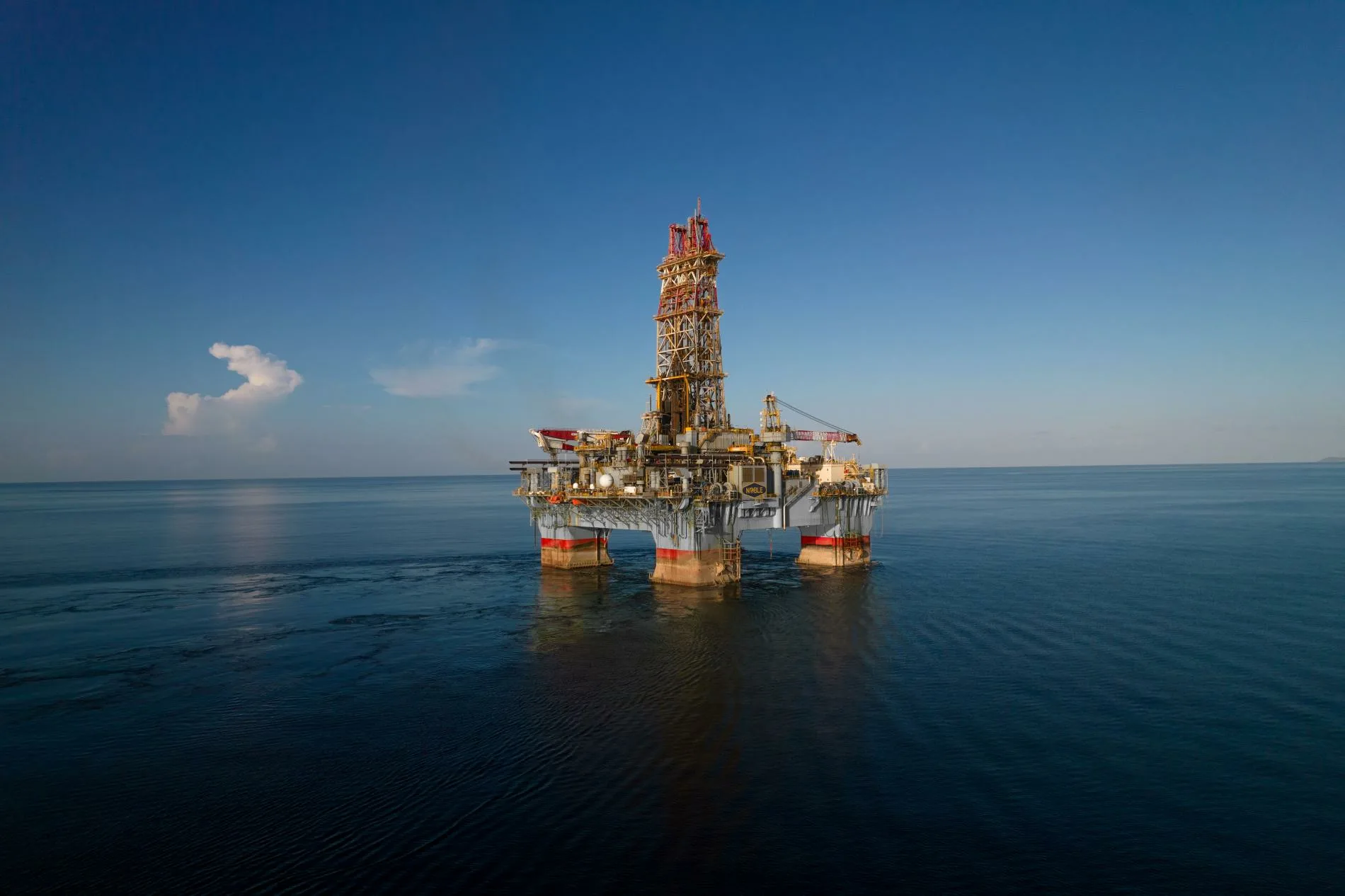
The Brazilian company Petroleo Brasileiro SA (Petrobras) has discovered a new natural gas field on the continental shelf of Colombia.
This was reported by the company’s press service.
The discovery was made during the drilling of an exploration well within the deepwater block GUA-OFF-O. The Copoazu-1 well is located approximately 36 km from the coast, at a depth of 964 m, and 8 km from the exploration wells Sirius-1 and Sirius-2. Drilling operations began on November 11, 2025.
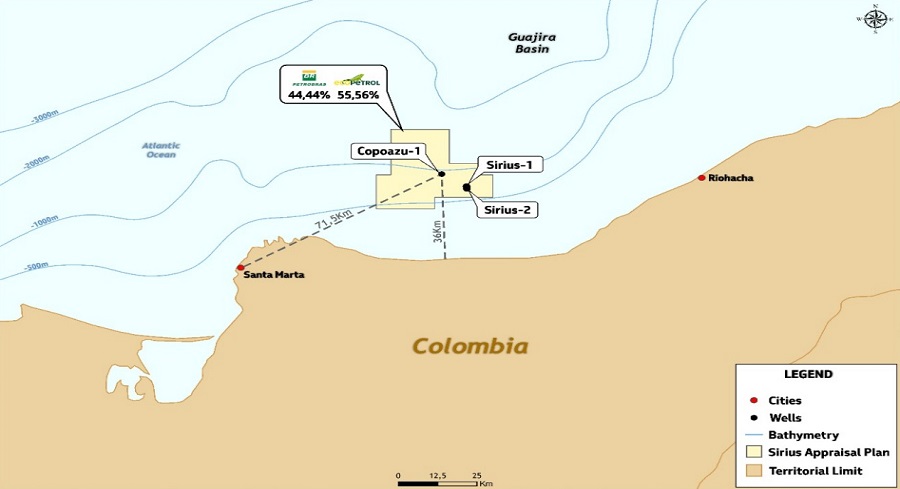
The presence of a gas-bearing interval is confirmed by electric logging data and well fluid samples. The company will send the obtained samples for laboratory analysis, which is expected to determine reservoir and fluid characteristics. This will make it possible to assess the field’s potential.
The GUA-OFF-O block is being developed by a consortium including Petrobras International Braspetro B.V – Sucursal Colombia (PIB-COL), a subsidiary of Petrobras, as operator with a 44.44% stake, and Ecopetrol (55.56%). Petrobras notes that its activities in the GUA-OFF-O block are in line with its long-term strategy aimed at replenishing oil and gas reserves through the development of new areas.
Colombia Oil and Gas Sector
The oil and gas industry of Colombia is a key source of export revenue, traditionally dominated by onshore fields and the state company Ecopetrol. However, under the government of President G. Petro, the sector faces significant challenges, despite offshore resource potential and the economic need to continue fossil fuel development. Proven oil reserves in Colombia amount to 2.036 billion barrels, while gas reserves exceed 83 billion cubic metres. However, production volumes are declining due to delays in several major projects. It is expected that as early as 2026, Colombia’s domestic demand for hydrocarbons will exceed available resources, with a gap of up to 30%, exacerbating the energy crisis.
Colombia aims to achieve a diversified energy balance, planning to reach 50% clean energy by 2030, attracting investment in renewable energy sources and positioning itself as a leader in climate policy, despite the significant role of oil and gas in the country.