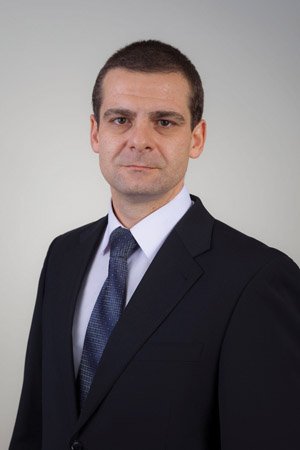
The ROGTEC Interview: Igor Kotman, Business Development Manager, “Halliburton” Russia

After the recent economic downturn the industry is rebounding and activity is up. How has the Russian market place improved over the last 12 months, what is your outlook for the rest of this year and 2012?
In 2010, although the physical volume of the market grew by more than 15%, the increased activity did not bring improvement in prices for Oilfield Services. Service companies were pushed for more discounts and increases in prices for some services were only due to the strengthening of the ruble. I believe that the oilfield services market grew by 6% in 2010 and that in the future the key activities influencing production will maintain healthy growth rates in 2011 through 2012. The growth rate will depend upon crude oil prices and many other microeconomic factors.
Russia is now the world’s largest oil producer. Do you see this trend continuing? What key problems would prevent it from being so?
As was demonstrated in 2010, new projects will continue to expand crude oil production in Russia. It is very likely that Russia will reach new highs in the next 5 years. Tax cuts are an important element in stimulating upstream projects and hopefully positive regulations will be accepted incentive for small, green & brown fields development and to start offshore projects.
There has been a recent spate of purchases and joint ventures between Russian service and equipment manufactures and the major international service companies. What do these companies bring to your portfolios and service ranges? Do you see more merger activity in the future?
We haven’t expanded our service portfolio by joint ventures or acquisitions in Russia. What we see as a positive trend in the OFS market is the sale of oilfield assets by producing companies. My opinion is that healthy competition promotes the development of any market and future impact of the spinning off OFS divisions by Exploration and Produсtion companies will be significant for the OFS industry.
How effectively are you competing with the domestic Russian service companies and how do you differentiate yourselves from them, when local content is often a predetermined necessity in field licenses?
The Russian market is very competitive and is somewhat unique in that it has well established local companies as well as our usual international competitors. We differentiate ourselves in the following ways (1) implementation of fit for purpose technologies that improve production and or reduce overall cost of operations (2) highly trained professional personnel (3) equipment reliability (4) our health, safety and environmental commitment and performance
During the down turn the price base of the services you offer was squeezed by the operators as they sought greater value. Have you experience an up lift now that the oil price has increased? If not, how can you try to regain your price value?
Yes. Our margins were squeezed just as other service companies margins were squeezed. However, we look forward to using the momentum generated by the international market growth as well as the opportunities we see in reducing our cost to drive our international margins back up.
As service providers of a range of oilfield solutions, ROGTEC understands that your focus at the moment is to offer the full range of services at the initial point of contact with the operator, instead of having different business units simply bidding in their specific segment area. If this is the case, what advantages does this change in focus bringing?
By expertly integrating the capabilities of multiple product service lines (PSLs), Halliburton can drive out operational inefficiencies and optimize reservoir performance for customers here in Russia. Halliburton has a track record in Russia of delivering large project objectives ahead of schedule by integrating multiple PSL offerings and technological solutions. When an OFS company is involved in all the stages of reservoir development from planning to implementation to managing the asset, the advantages are obvious: reduces operating costs and unlocks hidden potential of the asset.
Russia has recently announced a series of Arctic deals and is clearly pushing to tap its offshore reserves. How are you currently positioned to handle the significant increase in offshore work that will appear over the next few years? What changes will be necessary?
We think we are very well-positioned for the offshore projects. Globally, Halliburton is very experienced in the deepwater offshore market and we are able to leverage that experience for our Russia projects. We are looking forward to the offshore projects to commence in the near term and are currently working with the customer base to share information in deepwater applications. We are also able to leverage our offshore winter conditions experience from the Kashagan offshore project in the North Caspian.
America has recently seen a boom in shale gas production, with hydrofracturing (covered in issue 21) receiving mixed reviews. Do you see Russia developing shale gas in the near future and what potential does hydrofacturing have in the region?
Unlike the US, Russia possesses huge resources of natural gas so we do not see a boom production in shale gas in Russia in the near future. We also think that Russia will continue to increase its exports of natural gas to Europe in spite of the significant amount of shale gas resources. The reservoirs of shale gas in Europe are of good quality, however the infrastructure is not in place and it will take time to build all the required infrastructure to implement shale gas projects.
One operator recently commented in ROGTEC (issue 24) that a 10% increase in drilling costs through the adoption of ERD and sidetracking can lead to 100% increase in production. How receptive are regional operators to EOR and IOR techniques?
We can not speak for the operators, so I recommend that you contact an operator for a response.
What new technology from your product range do you think will have a major impact in the Russian oilfield over the next couple of years?
Rather than relying solely on the latest technologies, we believe the companies need solutions that are specifically designed to address their business issues, so they can make decisions, not compromises. This will enable operators to realize the highest performance of their assets. We think Halliburton Digital Asset® service environment will have a major impact in the market as it’s a real time, collaborative environment to model, measure and optimize the asset. Collaboration across disciplines in the oilfield represents one of our biggest challenges. Simply getting engineering, geology, geophysics, subsurface and other teams working together on the same problem at the right time represents a huge departure from the normal way we do business today. It’s an environment that changes the way our industry works – connecting people, processes and technology so that experts across disciplines can collaborate in real-time and have access to the data they need, when and where they need it.
The key tenet of the Digital Asset environment is a model-based, closed-loop, controlled approach. This relies on creating a model, then taking measurements from executing the model in a real environment, and optimizing the parameters. This approach — using a simple “Model, Measure, and Optimize” paradigm in every phase and facet of our operations– is critical to helping solve the biggest challenges.
The Russian market has made significant progress over that last few years. If you had a “magic wand” what one thing would you change to aid the regions continued improvement and why?
We believe the full cost of well services can only be truly realized when incremental production captured from a service event is modeled to calculate the true rate of return of the expenditure. The magic wand would be a shift from cost per foot analysis to a return on investment analysis.
As a last point of interest to our readers what is your theory on “Peak Oil”?
The Hubbert peak theory appeared in the sixties of the 20th century. As any other theory it has its supporters and opponents. It should be mentioned that the predicted maximum production and further decline at the end of the 20th century and the beginning of the 21st hasn’t been proved. Oil production is increasing. We should not forget about the technologies development and the improvement of the recovery methods. The resources considered in the past as inefficient from the economic point of view are being actively developed. Shallow oil and oil sands are the bright examples. Oil industry is progressing and much time will pass before we approach the peak oil production.
Igor Kotman has been working at the position of a Business Development Manager in “Halliburton” Russia since October 2010. Igor has a big experience in Oil & Gas industry. He graduated from Gubkin Moscow State Academy (now University) in 1994 with a degree of drilling engineer. Igor joined “Halliburton” in 1996 and until 2001 worked in Western Siberia as a FracAcid operator. After that he worked in Nizhnevartovsk as a Cementing engineer and then in Noyabrsk as an Account Manager, “Sibneft”. In 2002 Igor was invited to “Halliburton” Moscow location to work first as a Sales Manager and then as a Senior Account Manager, TNK-BP.