Zarubezhneft Plans to Increase Oil Production in Africa to 2 Million Tons/Year by 2030

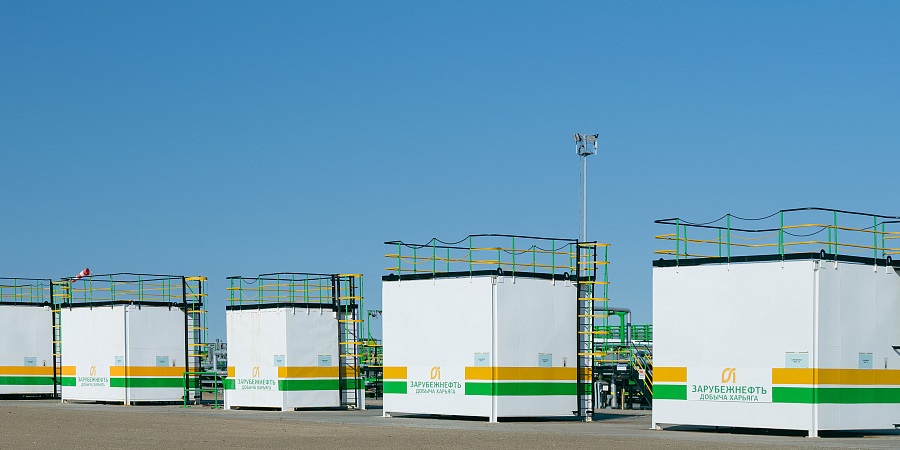
Oil producing company Zarubezhneft plans to increase oil production in Africa to 2 million tons per year by 2030.
This was stated by the company’s Deputy General Director V. Terentyev at one of the sessions of the Russian Energy Week (REN-2023).
The company intends to gradually achieve this goal:
- consistently entering new countries and studying the geology of the region,
- building relationships with regulators and contractors.
Africa is a key region for Zarubezhneft.
Currently the company operates in Egypt, Angola and other countries.
The company also considers Congo, Sudan, South Sudan and Mozambique as promising regions for creating a new oil and gas cluster.
Negotiations are ongoing to explore investment opportunities and begin operations in these countries in the medium term.
Zarubezhneft in Egypt
In 2019, a production sharing agreement (PSA) was signed between Zarubezhneft, the Egyptian Ministry of Oil, the Egyptian state oil company GANOPE and Pacific Oil Lt for the South East Ras El Ush (SEREU) and South East Ras El Ush (EGZ) blocks on the Egyptian shelf:
- the blocks are located in the Gulf of Suez at a distance of 10 km from each other;
- total estimated geological resources are more than 200 million boe.
In September 2023, Zarubezhneft won a tender for oil and natural gas exploration in Egypt as part of the EGAS 2022 international licensing round, receiving 1 oil and gas block as a concession in the Nile Delta.
The company considers the development of projects in Egypt one of the key areas of its international activities.
In Angola
Angola is the largest oil-producing country in Africa and is part of OPEC.
At the same time, Angolan oil is one of the best on the planet in terms of quality:
- up to 90% of oil is produced by the province of Cabinda – a northern semi-exclave surrounded by the territories of Congo and the Democratic Republic of the Congo;
- 65% of them come from offshore deposits;
- another 7.5% is mined in the Luanda area.
On April 4, 2019, Zarubezhneft General Director S. Kudryashov took part in the meeting of Russian President V. Putin and Angolan President J. Lourenço.
At that time, a presentation was made of Zarubezhneft’s capabilities in terms of developing mature fields on the shelf and onshore of Angola, although no specific agreements were concluded.
Zarubezhneft operated in Angola in 1970-1980. in collaboration with Angolan companies.
Since 1978, the state-owned company Sonangol has had a monopoly on oil production – but with the possibility of creating joint ventures with foreign companies, which was readily taken advantage of by almost all of the world’s leading oil and gas majors, including BP, ExxonMobil, Chevron, Shell, Total, Eni, etc.
In Sudan
Sudan is a very difficult country for foreign companies to operate in. The issue is political instability, largely due to the consequences of the secession of South Sudan in 2011, as a result of which about 75% of proven Sudanese oil reserves ended up in South Sudan, and the only export oil pipeline to the coast was controlled by Sudan.
The parties failed to agree on the use of the pipeline, forcing Sudan, once a net exporter, to import oil.
Currently, oil production in Sudan is 40-50 thousand barrels per day, which is not enough for local consumption.
In recent years, Sudan has failed to increase oil production, although there was information about hydrocarbon reserves in the Red Sea and in the north of the republic.
In 2021, another coup occurred in Sudan.
In 2015, Zarubezhneft expressed interest in developing 4 oil and gas subsoil areas in Sudan – blocks 8, 2-A-E, 25 and 17, but did not start working there.
In March 2023, acting Minister of Energy and Petroleum of Sudan M. Abdullah said that Sudan is open to cooperation with Russia in matters of oil production.