Kaliningrad Offshore Area Transferred to Caspian Oilmen

LUKOIL-Kaliningradmorneft has been placed under the management of LUKOIL-Nizhnevolzhskneft LLC. The restructuring was carried out to centralise the management of LUKOIL’s offshore projects. The changes took place in the fourth quarter of 2025, according to Interfax.
The managing company is expected to conduct production and commercial activities aimed at the efficient development, operation, and utilisation of assets involved in hydrocarbon production.
A territorial production enterprise (TPE) Kaliningradmorneft has been established within LUKOIL-Nizhnevolzhskneft. At the same time, previously existing structural divisions were removed from LUKOIL-Kaliningradmorneft, and their personnel were transferred to the new unit at the end of December 2025.
In 2025, LUKOIL-Nizhnevolzhskneft employed 1,522 people, compared to 1,397 in 2024. The company is developing fields in the North Caspian. In the Russian sector of the Caspian Sea, 10 fields have been discovered with total recoverable hydrocarbon reserves of 7 billion barrels of oil equivalent.
LUKOIL-Nizhnevolzhskneft operates offshore fields named after Korchagin, Filanovsky, and Grayfer. Total oil production exceeds 7 million tonnes.
LUKOIL-Kaliningradmorneft began production in the Baltic Sea in 2004, when the subsidiary launched its first offshore field — Kravtsovskoye (D6). Its recoverable reserves were estimated at 9.1 million tonnes. Prior to the reorganisation, this field accounted for more than half of the company’s oil production, which amounted to around 500 thousand tonnes per year.
In May 2019, LUKOIL-Kaliningradmorneft began commercial production from two wells at the offshore D41 field in the Baltic Sea, with recoverable reserves of 2 million tonnes. The current priority project is D33, where planned production is 1.5–1.8 million tonnes of oil per year.
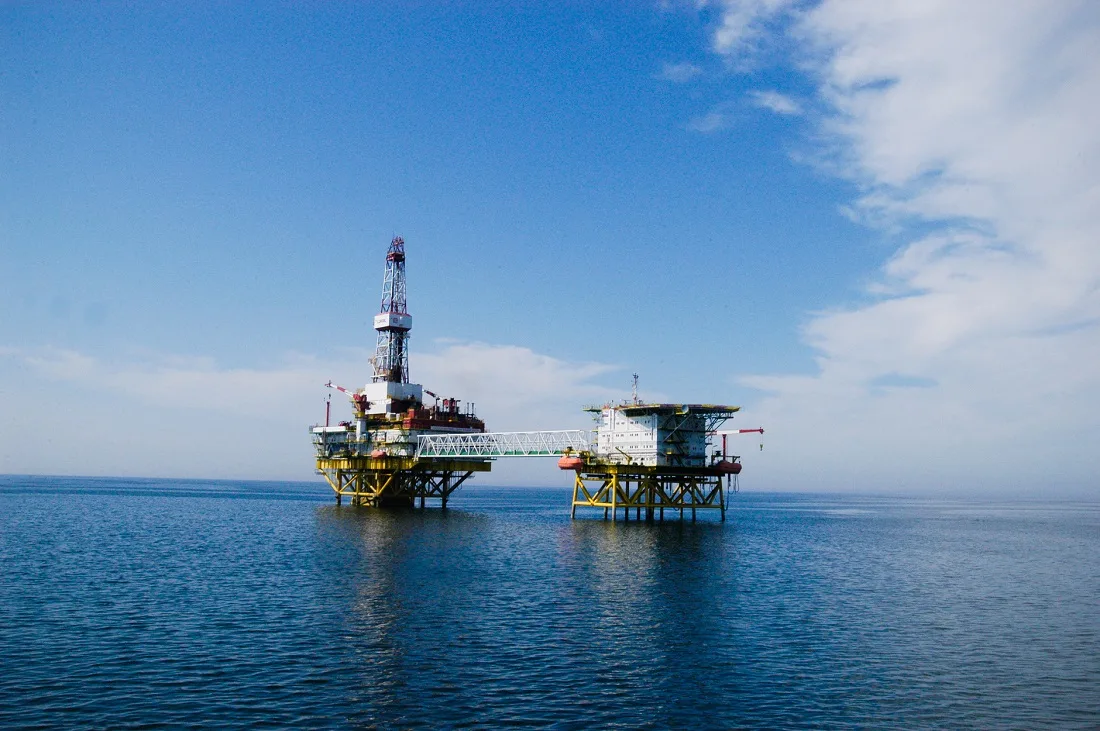
In July 2025, IA Devon reported that LUKOIL-Kaliningradmorneft had delivered a high-tech platform for the D33 field near the Curonian Spit. The height of the support block of the offshore ice-resistant fixed platform exceeds 90 metres.