LUKOIL Reduced Oil and Gas Production in Russia in 2025, While Refining Partially Recovered After 2024 Maintenance

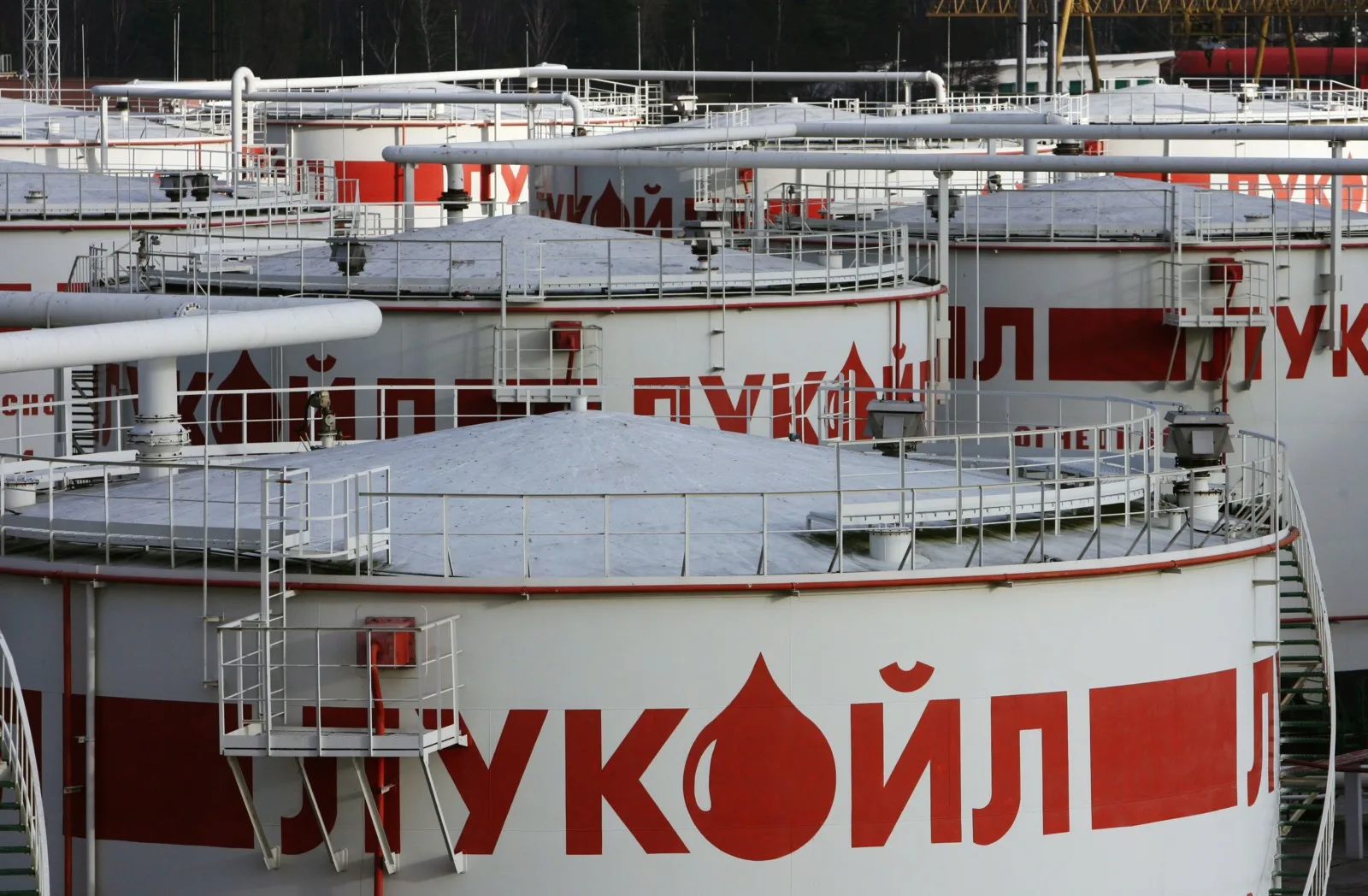
LUKOIL reduced oil production in Russia in 2025 by 2.1% compared to 2024, while refining increased by 2.3%. This follows from the company’s 2025 annual report, published in materials for the shareholders’ meeting scheduled for April 23, 2026.
Financial Aspect
The company does not separately disclose financial results for 2025, referring to the recently published IFRS statements for the year.
LUKOIL recalls that in November 2025, due to restrictive measures imposed by foreign states, the company lost control over its international assets. As a result, the reporting (both IFRS and the annual report) now includes only data on Russian assets.
Due to sanctions imposed by the United States and the United Kingdom, LUKOIL fully wrote off its investments in LUKOIL International GmbH (LIG) and recognized an impairment loss of 1.66 trillion rubles. As expected, the company reported a significant loss in its IFRS statements for 2025:
- net loss, including discontinued operations related to foreign assets, amounted to 1.06 trillion rubles, compared to a profit of 851.5 billion rubles in 2024;
- net profit from continuing operations decreased eightfold to 96.652 billion rubles;
- revenue from continuing operations fell by 15% to 3.768 trillion rubles;
- operating profit decreased by two times to 526.646 billion rubles;
- profit before tax declined fivefold to 291.317 billion rubles.
At the same time, LUKOIL disclosed its operational indicators in detail in the annual report.
Reserves, Licenses, and Exploration
Proven hydrocarbon reserves of LUKOIL in Russia under the SEC classification decreased by 5.2% in 2025, to 12.653 billion barrels of oil equivalent, of which 78% are liquid hydrocarbons and 22% gas. Liquid hydrocarbon reserves declined by 6% to 9.931 billion boe, while gas reserves decreased by 3% to 2.722 billion boe. Developed reserves (recoverable from existing wells using current equipment) account for 58% of total proven reserves and decreased by 7% to 7.97 billion boe.
Probable hydrocarbon reserves in Russia decreased by 10% to 5.291 billion boe, while possible reserves declined by 15% to 2.094 billion boe.
LUKOIL has been recording a decline in reserves for 10 consecutive years, but in 2025 the negative trend became more pronounced, which the company attributes to lower oil prices and the strengthening of the ruble. At the same time, reserve life remains high — 19 years overall, 18 years for liquids, and 27 years for gas.
The company highlights the following positive aspects of its resource base:
- most reserves are classified as conventional, ensuring low development and production costs;
- LUKOIL is among the крупнейших international and Russian companies in terms of proven liquid hydrocarbon reserves and reserve life;
- based on exploration and production drilling results in 2025, LUKOIL added 425 million boe of proven reserves (362 million boe in 2024);
- conversion of contingent resources into reserves added 65 million boe (17 million boe in 2024).
Exploration activities in 2025 are assessed by the company as highly efficient, which it attributes to the use of advanced methods and the selection of the most promising areas based on research results. In particular, in 2025:
- 61 exploration wells were completed, with a success rate of 85% compared to 81% in 2024;
- 27 accumulations and 7 new fields were discovered (8 fields in 2024);
- 3D seismic volume decreased by 5.9% to 4,055 km²;
- 427 km of 2D seismic was carried out (no such work was conducted in Russia in 2023–2024);
- exploration drilling footage amounted to 92 thousand metres (a 2.4-fold decrease), with 64% in Western Siberia, 17% in the Volga region, and 11% in the Pre-Urals.
The license portfolio of LUKOIL Group in Russia as of the end of 2025 amounted to 597 licenses (592 in 2024). Of these, 92% grant rights for exploration and production of hydrocarbons with an average remaining term of 32 years. The remaining 8% are licenses for geological study, prospecting, and evaluation, with an average remaining term of about 2.5 years.
In 2025, LUKOIL added 7 new licenses in traditional production regions — Western Siberia, the Perm region, and the Volga region. The company also extended 39 licenses, reissued 45 following asset reorganization, and relinquished 2 upon expiration.
Production
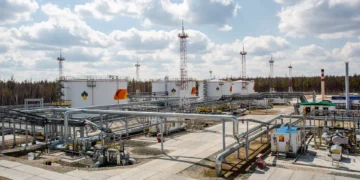
In 2025, LUKOIL’s hydrocarbon production in Russia amounted to 1.824 million barrels of oil equivalent per day, of which 85% (1.544 million boe/d) were liquid hydrocarbons and 15% (280 thousand boe/d) were natural and associated petroleum gas.
Compared to 2024, production decreased by 2.2% (liquids — by 1.9%, gas — by 3.8%). Overall in 2025, LUKOIL’sproduction in Russia totaled:
- oil with gas condensate — 74.9 million tonnes (15% of total Russian production), down 2.1% year-on-year;
- gas — 17.4 billion cubic metres, down 4.0% compared to 2024.
The decline in oil production was mainly driven by OPEC+ agreement parameters and additional commitments by Russia to reduce output. Gas production was also affected by external constraints under OPEC+, which led to reduced associated gas output. This was compounded by natural decline at mature fields and maintenance at gas processing facilities.
At the same time, in 2025, LUKOIL reported planned growth in oil production at priority projects, including continued increases at low-permeability reservoirs in Western Siberia. During the reporting year, oil production was launched at 6 new fields in Western Siberia, the Volga region, and the Kaliningrad region.
Development drilling volume in Russia totaled 2.786 million metres, down 14.6% year-on-year due to reduced oil production levels. A total of 836 new oil producing wells were commissioned, of which 32% were horizontal and multilateral wells. The producing well stock reached 29 thousand wells by the end of the reporting period.
Refining and Sales
In 2025, LUKOIL increased crude oil refining at its Russian refineries by 2.3% to 41.7 million tonnes. This was driven by the low base effect of 2024, when refining declined by 7.7% to 40.797 million tonnes due to major (mostly unplanned) maintenance works. The decline has now been partially recovered.
Other refining indicators in 2025 generally followed this trend:
- output of petroleum products at Russian refineries increased by 1.9% to 39.76 million tonnes (total capacity of four refineries — 50.9 million tonnes per year);
- yield of light petroleum products (excluding mini-refineries) increased by 1 percentage point to 72.2%;
- fuel oil yield rose by 1 percentage point to 10%;
- refining depth reached 89.5%, decreasing by 2 percentage points compared to 2024;
- the Nelson complexity index remained unchanged at 8.0 (indicating that higher fuel oil output and lower refining depth were likely driven by economic factors rather than technological issues);
- refining accounted for 56% of LUKOIL’s oil production in Russia.
The company noted that in 2025 it continued systematic efforts to improve efficiency, including increasing capacity and conversion of technological processes, improving yields, inter-refinery optimization, enhancing energy efficiency and operational reliability, and addressing logistical constraints.
Gas processing and treatment volumes amounted to about 3.7 billion cubic metres, down 7.9% compared to 2024, again due to OPEC+ restrictions. In the petrochemical segment, production decreased by 13.1% to 791 thousand tonnes.
Retail sales of petroleum products in Russia totaled 11.97 million tonnes, down 3% year-on-year but 1% higher than in 2023. The decline from 2024 peak levels was attributed to reduced diesel consumption in Russia. The company continued expanding its retail network, increasing the number of filling stations by 1.5% to 2,922.
As a supplier of bunker fuel, LUKOIL sold 1.4 million tonnes in 2025 (–11% year-on-year). Aviation fuel sales totaled 2.8 million tonnes, with “into-wing” supply increasing by 3.6% to 1.3 million tonnes despite lower passenger traffic. Sales of bitumen and asphalt products increased by 34.4% to 703 thousand tonnes.