MIPT Scientists Developed a Model Predicting Oil Properties During Production

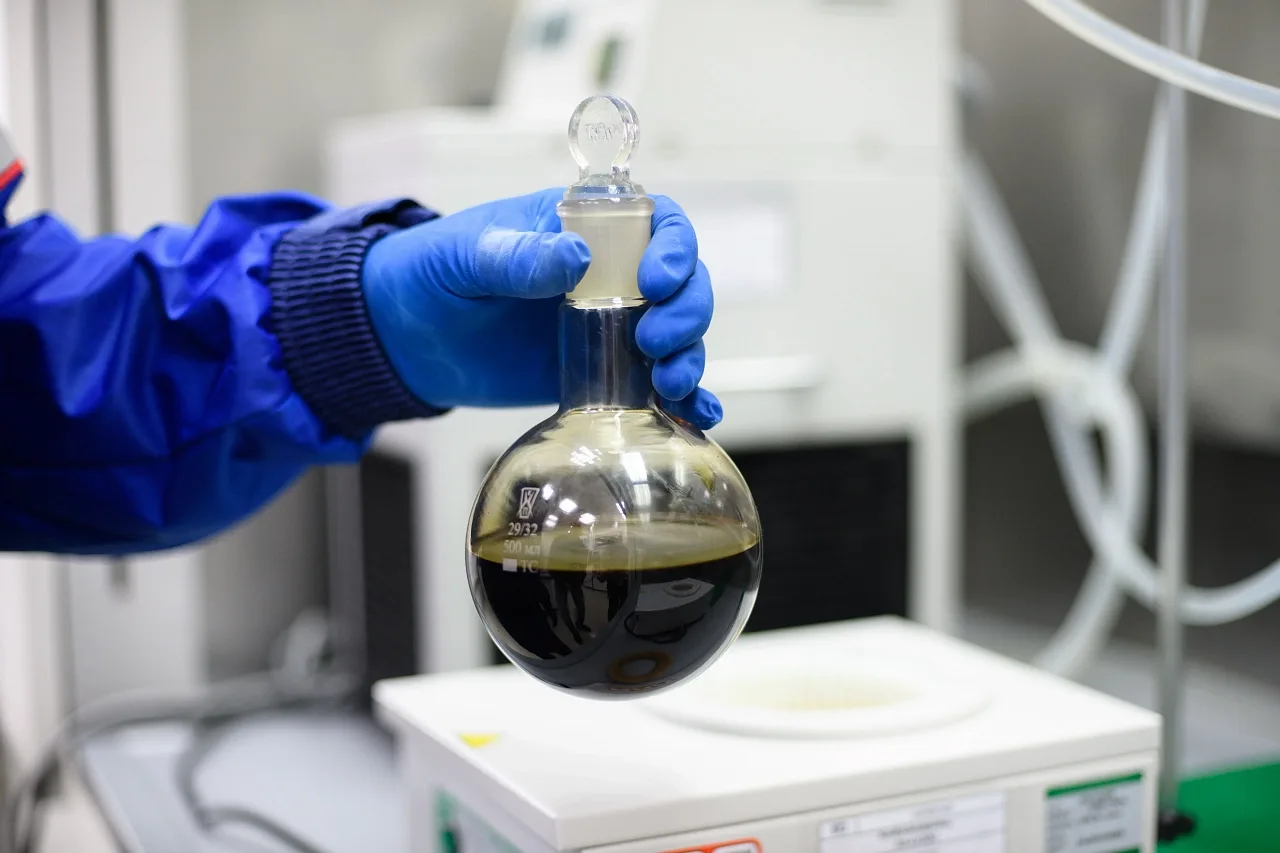
Scientists from the Moscow Institute of Physics and Technology (MIPT) have developed a model and a machine learning system that accurately predicts oil properties during production. According to the developers, this will enable more efficient oil recovery, the MIPT press service told RIA Novosti.
Rock formations are permeated with numerous small pores containing oil and water. Their ratio depends on interfacial tension — a force that acts like a film preventing the mixing of two liquids at their interface, the institute explained. The magnitude of interfacial tension determines how quickly production proceeds, how much oil can be recovered, and which enhanced oil recovery method is most effective.
Previously developed models cannot accurately predict how interfacial tension changes in real oil compositions — their error reaches up to 40%, while laboratory experiments capable of determining it take months and are too costly and labor-intensive, MIPT noted.
Scientists from the MIPT Center for Computational Physics, together with colleagues from the Joint Institute for High Temperatures of the Russian Academy of Sciences (JIHT RAS), the Tyumen Oil Research Center, and other organizations, created a multicomponent molecular model. Using a supercomputer, it predicts changes in interfacial tension with up to 90% accuracy, depending on oil composition, temperature, pressure, dissolved gases, and salts. This makes it possible to predict oil properties under conditions that are difficult to reproduce in the laboratory. Using these data, the scientists applied machine learning methods, further improving the accuracy of the molecular model.
“The model is particularly relevant for CO₂ injection technologies, where precise knowledge of interfacial tension is critical for forecasting oil displacement. The first prototypes have already been successfully tested… In the near future, we plan to adapt the model for heavy oils and to study the behavior of fluids in ultra-thin nanoscale menisci within rock formations,” said Ilya Kopanichuk, Senior Researcher at the MIPT Center for Computational Physics.